
Poker Texas Hold'em Odds: Counting Cards Instead of Charts
Hold'em odds start with a count: 1,326 deals, 169 starting hands and 47,008 heads-up matchups. Where the outs shortcut and preflop charts slip.
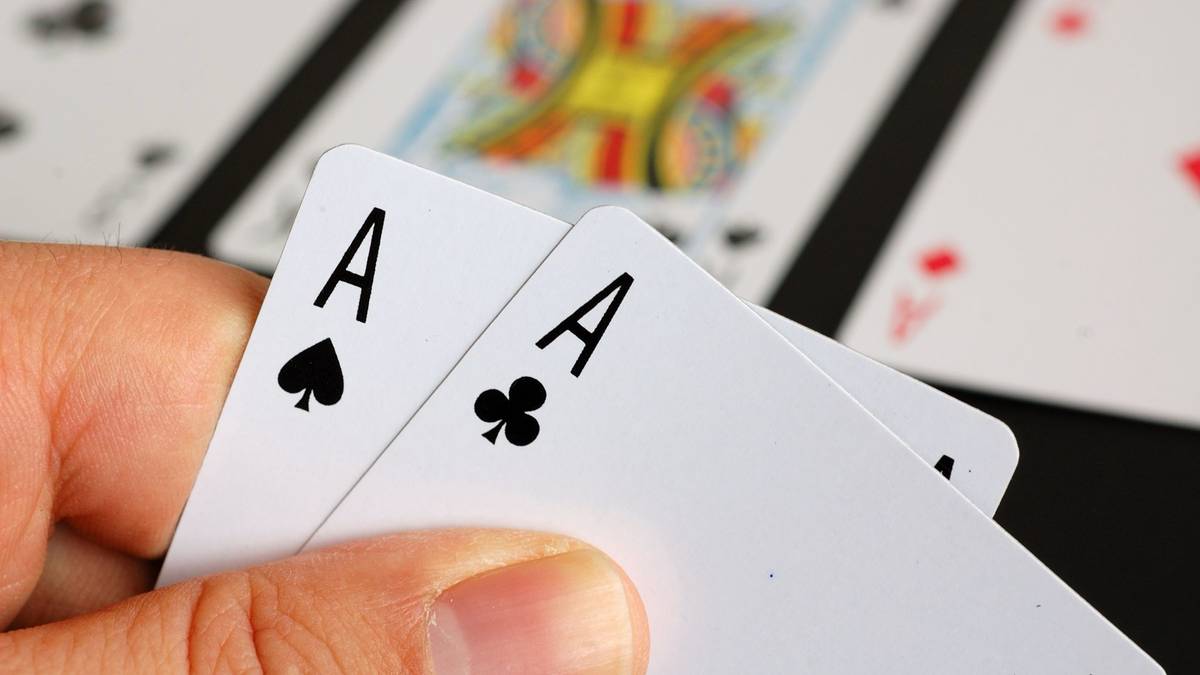
Texas Hold'em odds come from counting cards, not from memorising a chart. You count the cards that would win for you (your outs) against the cards you cannot see, and the preflop picture rests on a fixed census: 1,326 two-card combinations folding into 169 distinct starting hands. Every shortcut for poker texas hold'em odds is a compression of that census, and knowing where the compression happens tells you when to trust a chart and when to check it.
This entry works from the count upward. The Poker Odds shelf holds the rest of the reading room's material on the subject, and the Omaha poker odds calculator entry applies the same hand-checking method to a four-card game.
Where do Texas Hold'em poker odds come from?
They come from the size of the deck and the number of ways it can be dealt. Before anything else, a Hold'em player is choosing among a known, finite set of starting hands, and every later probability is a ratio taken from what remains unseen.
The census of starting hands is the first shelf to catalogue. Two cards from a standard deck give 1,326 combinations. Treating suits as interchangeable reduces these to 169 non-equivalent starting hands: 13 pocket pairs, 78 suited hands and 78 unsuited hands. The reference count is plain arithmetic, 13 × 12 × 1 / 2 for each of the two non-pair groups.
The detail that charts tend to bury is that these hands are not equally likely. A pocket pair can be made only a few ways, a suited hand a few more, an unsuited hand the most. Any table that lists the 169 hands side by side, as if each were one ticket in the draw, is already weighting them in a way the deck does not.
| Group | Distinct hands |
|---|---|
| Pocket pairs | 13 |
| Suited hands | 78 |
| Unsuited hands | 78 |
| Total | 169 |
For the counting that sits underneath full five-card hands, the entry on probability of poker hands sets out the combinations method in more detail.
How do outs turn into odds?
An out is an unseen card that would give you the best hand. The chance of hitting one is the number of outs divided by the number of cards you have not seen, and every card you cannot see counts, including the ones in the muck and on the burn pile.
After the flop, two more cards are to come. The clean way to find your chance of improving by the river is to work through the miss: take the chance that the turn misses, multiply it by the chance that the river misses given the turn missed, and subtract that product from one. This is exact, and it needs nothing but your outs and the size of the unseen pool.
The familiar rule of two and four replaces that product with a straight multiplication of your outs. It is a linear stand-in for a quantity that is not linear, which is why it reads close to the truth with a handful of outs and drifts further from it as outs pile up. A player who carries the exact method can see the drift; a player who carries only the rule cannot. The rule also says nothing about whether every out is clean. An out that completes your hand while pairing the board, or that gives an opponent a better hand, is not a full out, and no multiplier will notice.
Does the burn card change the odds?
No. The burn card is a procedural guard, not a change to the deck, and the tournament rulebook says so directly.
The Poker Tournament Directors Association, in its rules as of January 2026, states that the burn card protects the stub, not that it preserves card order. The same rule fixes the procedure: one burn per street, never more. From the player's chair, a burned card is one more card you have not seen. It neither removes your outs nor adds to them, because you never knew what it was.
The rulebook even plans for the deck going wrong. When a flop comes out with four cards instead of three, the dealer mixes the four cards face down and the floor picks one at random as the next burn, with the other three becoming the flop. The point of the scramble is that no one gets to steer which card leaves play, so the unseen pool stays random and the counting above still holds.
How exact are preflop matchup odds?
Exact, in principle, but rarely worked out by hand. Preflop equity in a heads-up hand is a full enumeration of every board that can still be dealt, and that enumeration is heavier than any chart lets on.
In their account of teaching a university course on gambling mathematics, Ethier and Hoppe describe heads-up Hold'em as fully analysable with substantial computing, adding that simulation is feasible but much less reliable. Their worked example, ace-king suited against a pair of eights, is a calculation that ultimately must be confirmed by computer. And that example is, in their words, only one of 47,008 heads-up matchups once equivalent cases are grouped.
That figure is where the shortcut charts in the top results tend to go wrong. A chart that lists one equity per pair of hand classes is averaging over suit relationships the specific matchup may not share, and a chart built from simulation inherits its sampling error. Neither makes the chart useless; both make it a summary. The reliable habit is the reading-room one: treat the chart as a card catalogue entry, and go to the enumeration when a decision turns on a narrow margin.
The same caution applies in the casino banking version of the game, where the Ultimate Texas Hold'em rules set the dealer's qualifying hand and so change which matchups matter.
From the reference desk
How many starting hands are there in Texas Hold'em?
There are 1,326 two-card combinations, which fold into 169 distinct starting hands once suits are treated as interchangeable. Those 169 hands are not equally likely, so a pocket pair turns up less often than a given unsuited hand.
Does the burn card change the odds?
No. Under the 2026 Poker TDA rules the burn exists to protect the stub, with one card burned per street and never more. A burned card is simply another card you have not seen, so it belongs in the unseen pool when you count outs.
Can Hold'em odds be worked out exactly?
Yes, for heads-up play, but not by hand at scale. Ethier and Hoppe note that complete analysis needs substantial computing, that simulation is less reliable, and that there are 47,008 distinct heads-up matchups to cover.
Why do two odds charts give different numbers for the same hand?
Usually because one is exact and the other is simulated or rounded. A chart built on the 169 hand classes also averages over suit combinations that a specific matchup does not share, so its figure is a summary rather than the answer for your exact cards.
Bibliography
- Ethier and Hoppe, arXiv (University of Utah, McMaster University), Teaching a University Course on the Mathematics of Gambling, n.d., accessed November 2026
- Poker Tournament Directors Association, Poker TDA Rules, 2026 version, January 2026
- Wikipedia, Texas hold 'em starting hands, n.d., accessed November 2026

Filed on
Recently shelved
- PO·O528
Omaha Poker Odds Calculator: Checking the Math by Hand
Every Omaha equity tool rests on one rule and a few counts: 270,725 hands, 16,432 distinct starts, two hole cards always. Here is how to audit the output.
By Play Trump Casino Reading Room
- TH·U577
Ultimate Texas Holdem Payout: Blind and Trips Pay Tables
The Blind tops out at 500 to 1, Trips at 50 to 1. Regulator pay tables, the four Trips variants, and how they move the house edge from under 1% to over 6%.
By Play Trump Casino Reading Room
- PH·C273
3 Card Poker Hands Ranked: Why Straights Beat Flushes
Three cards flip the usual order: 720 straights against 1,096 flushes. The hand ranks, the ace's two ends, and what Pair Plus tables cost.
By Play Trump Casino Reading Room
- CH·F526
Flamingo Casino History: Records Behind the Bugsy Legend
Billy Wilkerson named it and Bugsy Siegel overspent on it: the Flamingo's documented record, from a $600,000 bank loan to a $6 million opening.
By Play Trump Casino Reading Room