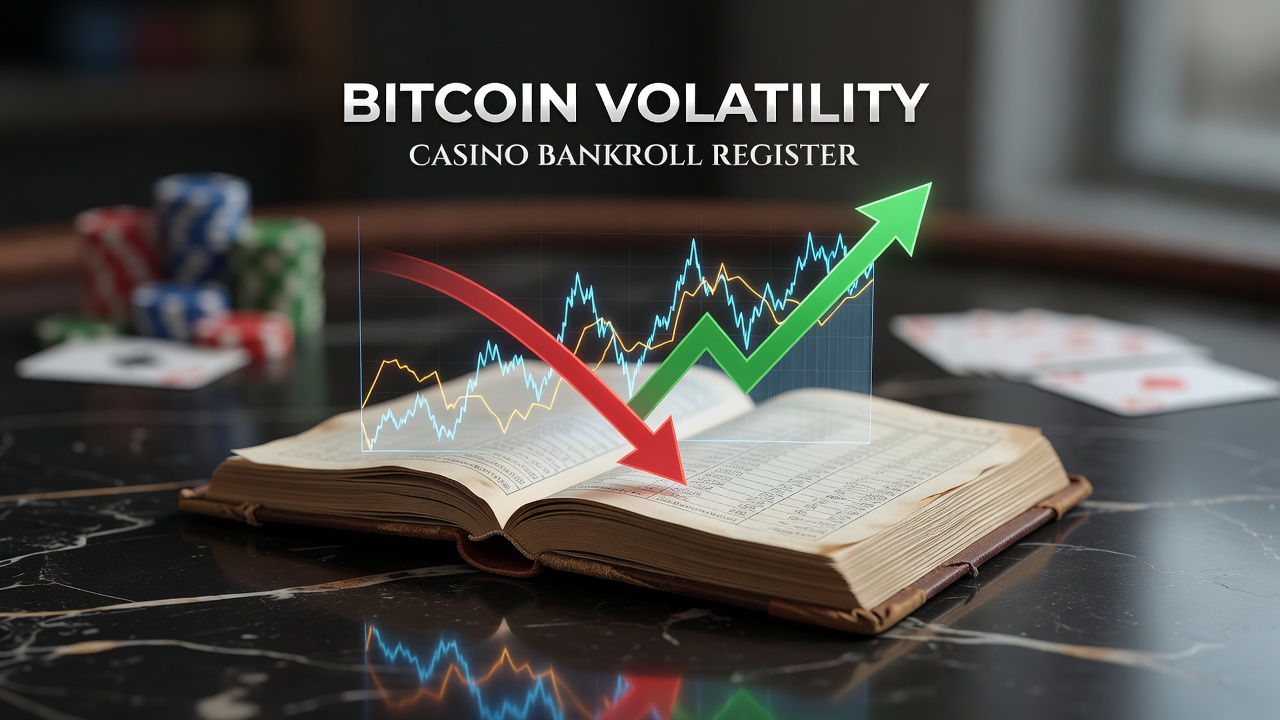
Bitcoin went up 12 percent last week. Your bankroll went with it. You did not place a single bet. That is either free money or a nightmare, depending on your read of the market. Either way, it is not gambling anymore. It is a volatility bet wrapped inside a gambling game.
Some crypto casinos saw this problem and decided to fix it. Instead of accepting Bitcoin or Ethereum (coins that bounce 10 to 40 percent in a month), they built their platforms around stablecoins: Tether, USDC, DAI. Coins pegged to the US dollar at 1:1 ratio.
This is not a random choice. It is a full-court press against player confusion and casino liability.
The Bitcoin Problem
Suppose a player deposits 0.1 BTC when Bitcoin is at $60,000. They have a $6,000 bankroll. They play a little, win a little, lose a little. At the end of the month, Bitcoin has moved to $67,200. The player's 0.1 BTC is now worth $6,720.
Have they won or lost? At the tables: lost $150. In their pocket: up $720. When they withdraw, they see the gain. The house edge on their actual play was erased by market movement.
Now flip it. Bitcoin is at $53,000 at withdrawal time. The player who won $200 at the tables is down $700 in real terms. They got hosed by volatility, not skill. The casino ends up explaining to a player who won money why their bankroll is smaller.
This creates friction at the margin. Some players blame the casino. Some players get upset that they won at the table but went home down. The casino has to process support tickets and potentially chargebacks based on market moves they have no control over.
The Stablecoin Solution
With Tether or USDC, a deposit of 1000 USDC is always worth approximately $1000. When the player cashes out, 1000 USDC is still worth approximately $1000. No surprises. No hidden market bets.
The player can still take a directional bet on crypto if they want to. They can convert some stablecoin to Bitcoin inside their casino wallet and let the price move. But it is an opt-in choice, not the default state of holding a bankroll.
Casinos benefit because they do not have to explain volatility losses. The player's P&L at the table matches their P&L in the bankroll (minus fees and house edge). The math is clean.
Volume and Regulation
Stablecoins also appeal to regulators. MGA and UKGC prefer casinos to handle fiat-equivalent currencies rather than pure crypto volatility. A stablecoin is regulated more like a stored-value account (if at all) and less like an investment asset.
Bet365 and DraftKings do not accept crypto for this reason. Pragmatic Play (a major slot content provider) does not integrate directly with crypto casinos. But Stake, Cloudbet, and other pure-crypto operators have discovered that using only stablecoins lets them operate in gray zones with slightly less regulatory friction.
The pitch to players is clear: the upside of blockchain payments without the downside of being accidentally long Bitcoin.
The Trade-offs
Stablecoins have their own costs. Tether is the most liquid but is subject to recurring conspiracy theories about whether the USD backing it actually exists. USDC is backed by regulated US banks and is safer but less liquid. Moving between stablecoins creates slippage.
Some casinos charge to convert fiat to stablecoin and again to convert back. These fees can run 1 to 3 percent each way, which eats into the bankroll before the house edge has a chance.
For very large deposits, holding stablecoin introduces counterparty risk: if Tether implodes or the casino gets its assets frozen, the player has no recourse.
The Actual Play
The result is that stablecoin-only casinos attract a different crowd. Less speculation. More people who just want to play roulette or poker without worrying about whether Bitcoin rallied while they slept.
It is a refinement of the product, not a revolution. The house edge remains the same. The player experience is slightly less noisy. Some players prefer that noise-free play. Others miss the optionality of holding volatile assets.
In the long run, this is probably what adoption looks like: crypto casinos that use blockchain rails (instant settlement, true anonymity if you want it) but denominate everything in stablecoins. You get the tech benefits without the volatility headache.