The Initial Connection
When you deposit at an online casino, your first connection point is encrypted. The casino uses HTTPS, which means your traffic is encrypted from your device to their server. No intermediary can read what you're sending.
This is table stakes. Any licensed casino has HTTPS. If a casino doesn't, don't use it.
Card Data Storage
When you enter your credit card, that data needs to be stored somewhere. Licensed casinos don't store the full card number. They use tokenization: your card data is replaced with a token, and only that token is stored in the casino's database.
The actual card data is stored by the payment processor, not the casino. So if the casino's database is breached, the attacker gets tokens, not card numbers.
KYC and Identity Verification
Before accepting a deposit, licensed casinos verify your identity. They ask for proof: government ID, utility bill, passport.
This seems like it's for the casino's benefit (and it is; they need to know who they're dealing with). But it's also for payment security. An attacker who tries to deposit using a stolen card will fail the identity check.
Address Verification System (AVS)
When you enter your credit card, the payment processor automatically checks whether the billing address you provided matches what the card issuer has on file.
If they don't match, the transaction can be flagged or declined. This catches situations where someone is using a stolen card with a different billing address.
3D Secure
Many payment processors require 3D Secure authentication: a second factor for credit card transactions. You enter a code sent to your phone or provided by your bank.
This adds friction but prevents unauthorized transactions using stolen cards. An attacker who has your card number but not your phone can't complete the 3D Secure check.
Fraud Detection Systems
Licensed casinos use machine learning to detect unusual transactions. The system learns your normal patterns: what time of day you typically deposit, how much you deposit, what payment method you use.
If a deposit doesn't match your pattern, it gets flagged. A real person reviews it before it goes through.
Examples of flagging: you normally deposit $100 from the UK, but suddenly someone tries to deposit $10,000 from Nigeria. That gets flagged.
Withdrawal Security
Withdrawals have additional security because they involve money leaving the casino. Most licensed casinos require that withdrawals go to the same payment method used for deposits.
If you deposited via credit card, you have to withdraw to that same card. This prevents casino accounts from becoming money laundering vectors (deposit from source A, withdraw to source B).
Account Security
Your casino account itself is password-protected. Licensed casinos require strong passwords and often mandate 2FA (two-factor authentication).
2FA means that even if an attacker steals your password, they can't access your account without your phone.
AML/KYC Compliance
Anti-Money Laundering and Know Your Customer regulations require casinos to monitor for suspicious behavior. Large transactions or patterns of transactions get reported to financial authorities.
This seems privacy-invasive, but it's designed to prevent money laundering and terrorism financing. It protects the financial system.
Data Breach Response
Licensed casinos are required to report data breaches to regulators and to affected customers. They have to disclose what data was stolen and what they're doing to fix it.
This accountability creates incentive to actually secure customer data.
Why This Matters
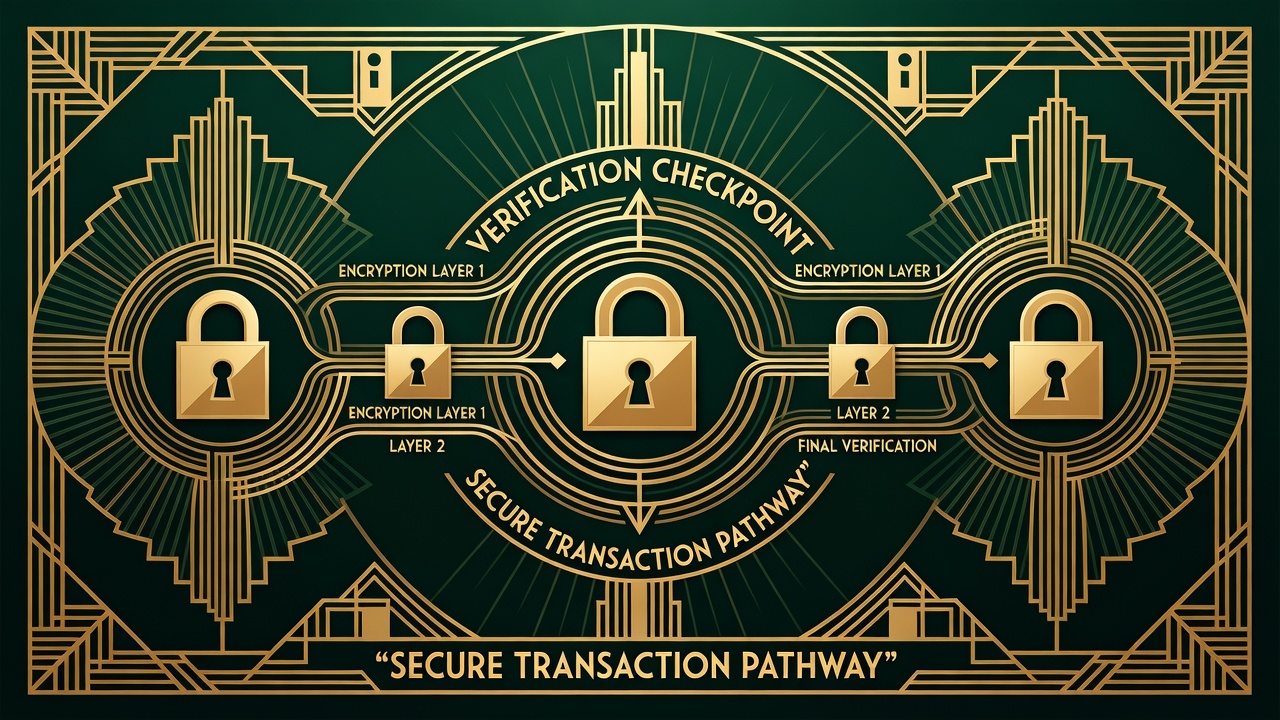
Payment security at licensed casinos is multi-layered because each layer prevents specific attacks. HTTPS prevents interception. Tokenization prevents storage breaches. Identity verification prevents account takeover. AVS prevents stolen cards. Fraud detection catches unusual patterns.
An attacker would need to break multiple layers simultaneously, which is harder than breaking one. This is defense in depth.
The Unregulated Alternative
Unlicensed casinos often skip these layers. They might store full card numbers. They might not verify identity. They might not use HTTPS properly.
This is not just worse for players' security; it's easier for criminals to exploit. Unregulated casinos become targets for fraud.
The Trade-off
All these security measures create friction. Verification takes time. 2FA adds steps. Fraud detection might decline your legitimate deposit.
But the friction prevents fraud. A faster, less secure system serves criminals better than it serves legitimate players.