You're at the casino bar, drink in hand, phone in the other. You pull up your sportsbook app. The question hits you before the first bet even registers: which connection is going to keep this thing running smooth. Mobile data or Wi-Fi. This matters more than you think.
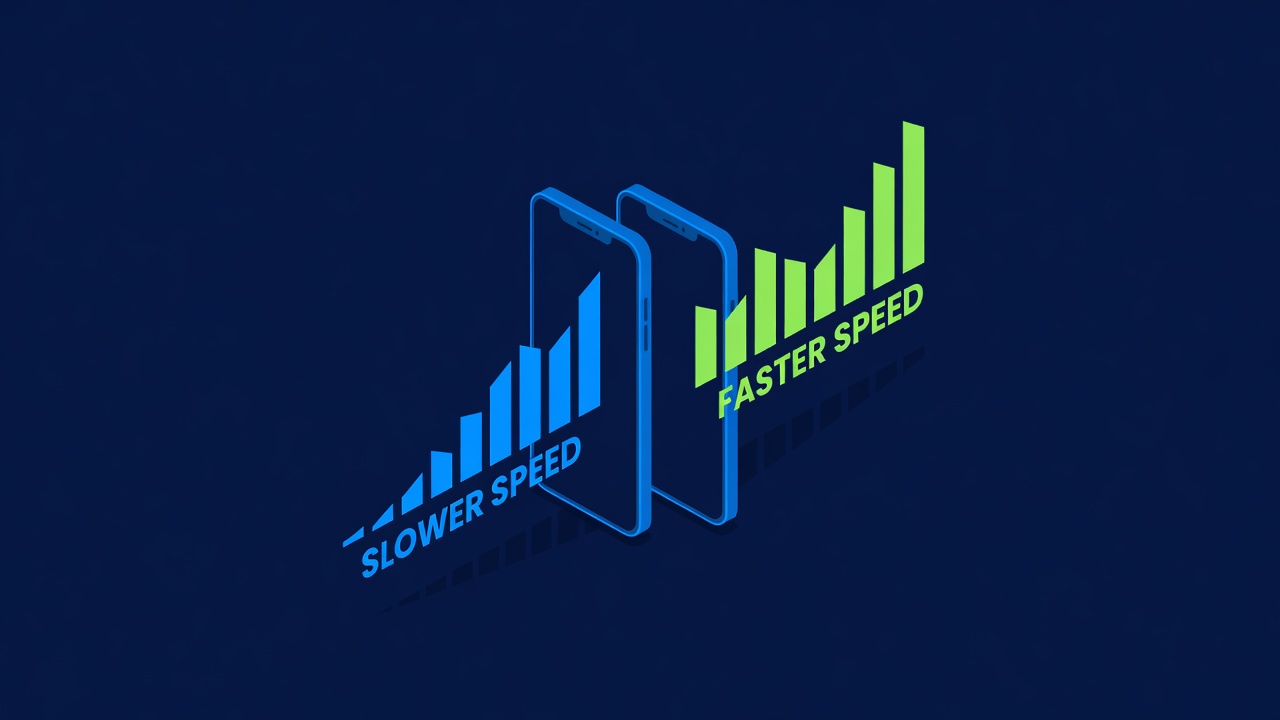
Here's the real situation: mobile data is fast. Seriously fast. 5G networks run 100 to 200 megabits per second. You're not going to hit any bandwidth wall with your casino app. Live stream? No problem. Bet placement? Instant. The casino servers don't even notice you're there. But speed is not the only issue. You're also dealing with stability. Mobile data gets choppy. Your signal wavers. The connection drops for two seconds. The app freezes. That two-second freeze can cost you real money if you're in the middle of a live betting window.
Why This Actually Matters
Casino apps have latency requirements. Your bet needs to reach the server before the window closes. Live dealer games especially. You place a bet at seventeen seconds left on the clock. The server needs to receive it by nineteen. Mobile data sometimes adds a 500-millisecond lag. Sometimes it adds three seconds. You don't get to see the lag coming. It just happens. The bet doesn't go through. The dealer moves on. Your money stays in your account.
Wi-Fi is more stable, but it depends entirely on whose Wi-Fi you're using. The casino's Wi-Fi? Probably solid. The hotel's network? Decent. Your friend's home Wi-Fi? Could be anything. You're counting on someone else's router. If fifty people connect to the same network, bandwidth gets shared. Your data rate drops. Your experience suffers. But if the network is good, Wi-Fi gives you rock-solid latency. Fifty milliseconds. Sixty. Consistent. Predictable.
The Strategy
Use Wi-Fi whenever you have access to a quality network. Home network, casino network, office network, any network where you know it's not going to collapse under load. Use mobile data as a backup when Wi-Fi isn't available or is suspect. Don't take a shot on a network you don't trust. The difference between a connection that holds steady and one that hiccups at the wrong moment is the difference between your bet going through and your bet getting rejected.
One more thing: battery life. Mobile data drains your battery faster than Wi-Fi on most phones. You'll burn through thirty percent battery playing cards for an hour on data. Wi-Fi uses less power. If you're going to be playing for hours, Wi-Fi wins. Your phone stays alive longer. Your session stays alive longer.
The casino app developers know this. They built their systems to prioritize stable connections. They've stress-tested on both. But they can't control the network on your end. You have to. Pick the right connection. Stay in the game.
Let's talk about specific scenarios. You're in your apartment on a solid home Wi-Fi connection. This is the gold standard. You get low ping (latency), consistent bandwidth, stable service. You can play hour after hour without worrying about drops. Moving to mobile data? Your latency jumps. It's not necessarily bad, but it's less reliable. Now you're at the casino itself. The casino's Wi-Fi is solid because they invest in infrastructure. Players need reliability. But the casino's network can get congested during busy hours. Mobile data becomes an attractive backup if you're just making a single bet. For sustained play, stick with the casino's Wi-Fi. You're in a coffee shop. This scenario is worst-case for either option. The coffee shop Wi-Fi is shared with dozens of people. Mobile data might actually be better here because you get a dedicated connection. It's slower than you'd like, but it's yours.