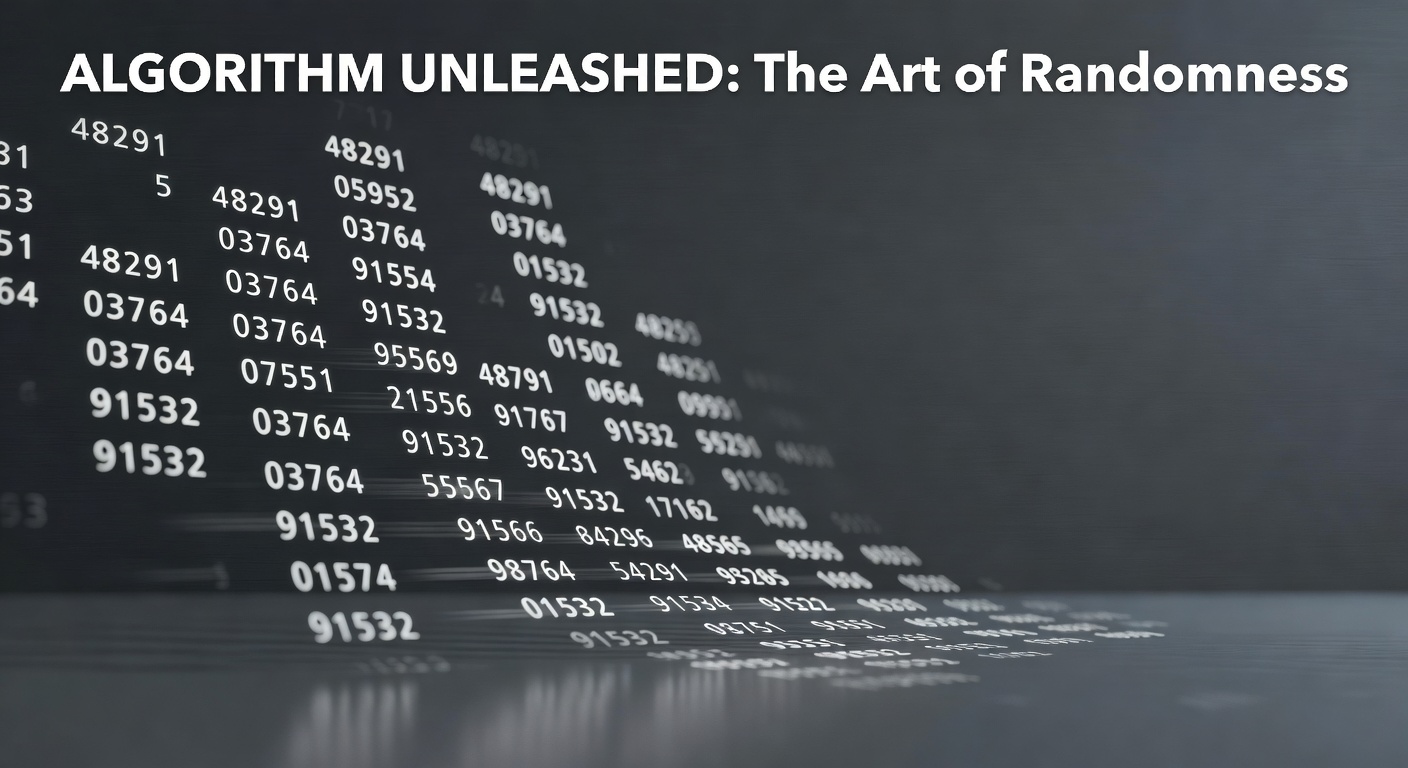
RNG stands for random number generator. In slot games, the RNG determines the outcome of every spin. It is the ref. It is making the calls. And just like refs in sports, it has to be tested to make sure it is not corrupt.
How corrupt could an RNG be? Let me put it this way: if an RNG is biased toward certain outcomes, the house advantage increases. If an RNG is weighted to hit bonuses less frequently than the math says it should, players lose money faster. If an RNG is seeded by predictable input (like the current time), a skilled player could potentially predict outcomes.
That is why auditors test these things. That is why regulatory bodies require it.
The Testing Process
First, the RNG code itself is reviewed. An auditor looks at the algorithm, line by line. Is it using a known, proven random number generation method? Or is it using something proprietary and unproven? Known methods like the Mersenne Twister have been studied for decades. Their properties are well understood. A proprietary method is a red flag.
Second, the seeding mechanism is tested. How does the RNG get its initial seed? If it is seeded with something predictable (the time of day, the player's ID number), then the sequence of random numbers is predictable. Good RNGs are seeded with entropy from sources that are genuinely unpredictable: system hardware entropy, network timing, environmental noise.
Third, the output is tested statistically. This is where things get math-heavy. The auditor generates a large sample of RNG output, say one million numbers, and runs statistical tests. Do the numbers show patterns? Do they cluster in certain ranges? Do they show bias toward high or low values? A good RNG passes these tests. A bad one fails them.
The Specific Tests
The Diehard tests are a battery of statistical tests for randomness. There is the Frequency Test, which checks if the numbers are uniformly distributed. The Run Test, which checks for sequences of consecutive similar values. The Spectral Test, which looks for patterns in higher-dimensional space.
Each test produces a p-value. A p-value below 0.01 means the sequence probably has a bias. Between 0.01 and 0.05, suspicious but inconclusive. Above 0.05, probably random. A good RNG passes all these tests with flying colors.
For slot games specifically, the RNG is also tested against the game itself. If the RNG claims to produce a certain payout percentage (let us say 94 percent), the auditor plays the game millions of times with the RNG and checks: does the payout actually hit 94 percent? Or is there a discrepancy that indicates the game logic is not correctly implemented?
The Regulatory Standard
In most jurisdictions, the standard is eCogra or GLI, Gaming Laboratories International. These organizations have published standards for RNG testing. Operators who are licensed in UK, Malta, Gibraltar, or other major jurisdictions have to have their RNGs tested to these standards every year, sometimes more frequently.
The tests are not cheap. An independent audit of an RNG and the game implementation can cost fifty to two hundred thousand dollars depending on the complexity of the game and the scope of testing. That cost is passed along: operators pass it to players through the house edge. But the testing itself is real. The auditors are independent. The results are published.
What Can Go Wrong
A biased RNG usually shows up in statistical testing. But there are subtler problems. A game could have a correct RNG but incorrect implementation. The programmer might have made a mistake in how the RNG output is mapped to game outcomes. The RNG generates a number between 0 and 1,000,000. The game is supposed to check: if number is between 0 and 50,000, hit the jackpot. But if the programmer checks: if number is less than 5,000, hit the jackpot, the payout percentage is wrong.
This is why auditing includes both the RNG and the game logic. It is not enough for the RNG to be random. The game has to correctly use that randomness.
Why It Matters for You
If you are playing at a licensed operator, the RNG has been tested. That does not mean you will win. It means the game is not rigged in the sense of being systematically biased against you beyond the stated payout percentage.
At unlicensed operators, there is no testing. No audit. No proof that the RNG is actually random. This is the main reason to stick with licensed operators: not because they are more fun or offer better games, but because you have proof that the game math matches what is advertised.
The RNG is not your friend. It is the house's tool. But an audited RNG is an honest tool. It is a tool that has been checked to make sure it is not more friend to the house than the math already makes it.