A law that forbids something creates a market for people who will supply it anyway. This is straightforward economics. When there is demand and the legal supply is zero, illegal supply rises to fill the gap. Prohibition created speakeasies. A similar mechanism created illegal casinos.
Before Prohibition, gambling was already illegal in most states. But enforcement was inconsistent. A casino operating in a particular town might pay off local law enforcement and operate openly. Once Prohibition started, enforcement became more serious. Federal agents, state agents, and local authorities all had pressure to arrest people for violating federal law.
Gambling became grouped with drinking as a vice to suppress. But the public still wanted both.
The Growth
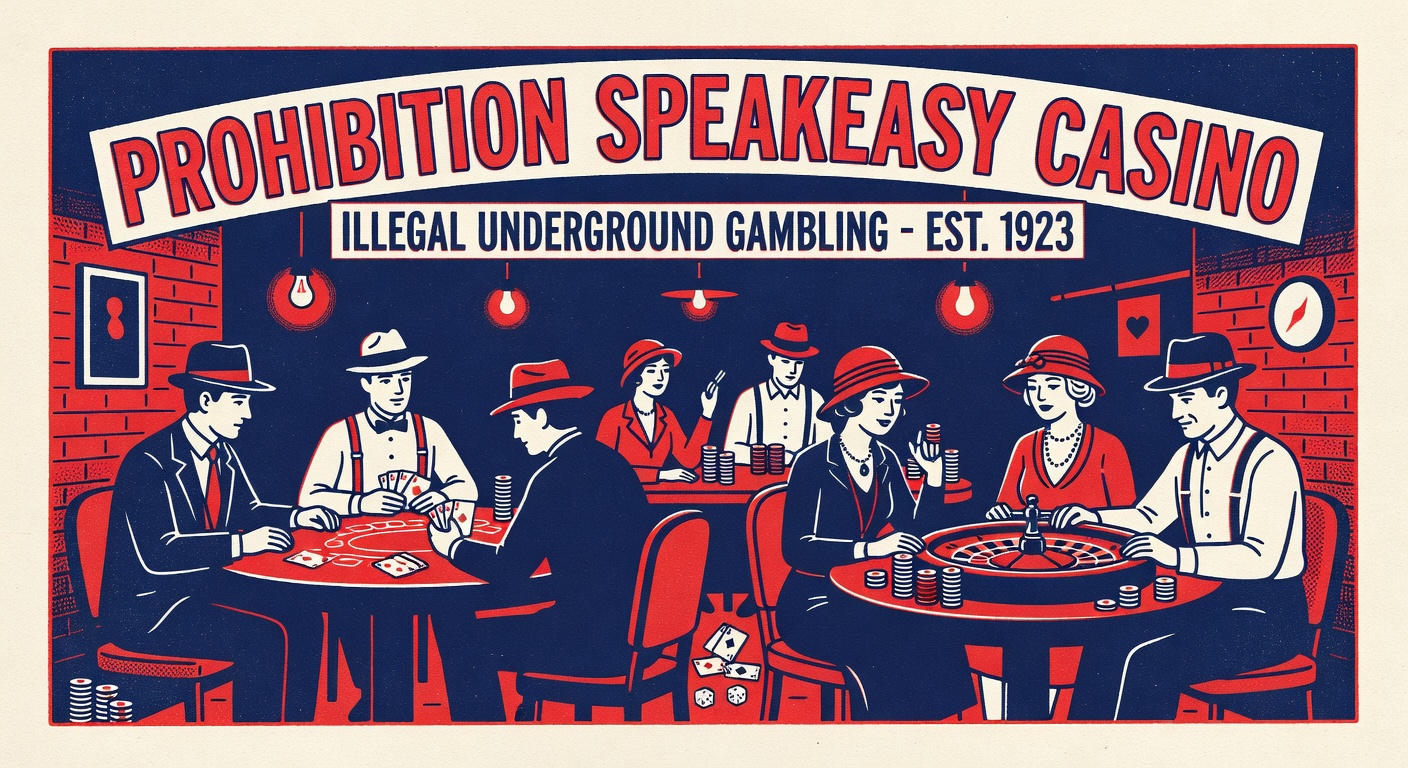
Illegal casinos during Prohibition were typically: backroom operations in larger buildings (apartments, warehouse lofts), private clubs that required membership, games in the back of other businesses (barbershops, laundries). The operation had to be mobile enough to move if police raided but established enough that regulars could find it.
The largest operations were in major cities. New York had hundreds of illegal casinos at the height of Prohibition. Chicago had famous operations run by organized crime. The games were mostly poker, blackjack, roulette, and craps, the same games that had been played legally a few years before.
How They Stayed Open
Illegal casinos stayed open through a combination of bribes to law enforcement and operational sophistication. A casino owner might pay a police captain $500 per month to stay off their block. The payments were informal but consistent. The police got a cut, the casino got protection.
This arrangement was possible because the police, the local government, and the casino owners were all in the same city. A relationship could be maintained. A level of trust could be built. Both sides understood the terms.
Operational sophistication meant: outside lookouts watching for police, quick-exit routes, ability to move to a new location fast if a raid happened, coded language used by regulars so new people could not just walk in.
The Economics
An illegal casino made more money than a legal one because it paid no taxes. A legal casino in (theoretically) a jurisdiction where gambling was legal would pay licensing fees, taxes, and operational costs. An illegal casino paid none of these. The profit margin was higher.
This economics attracted organized crime. The Mafia had the organizational structure and the willingness to use violence to protect territory. A Mafia-run casino could not be competed with by an independent operator because the Mafia could ensure the independent operator's casino was raided by police.
Monopoly profits attracted investment. Organized crime could operate multiple casinos under a coordinated structure, spreading risk and increasing total profit.
The Customer Base
Who gambled at illegal casinos? Mostly working-class people and criminals. Wealthy people had clubs and private games. Middle-class people might gamble occasionally but did not have regular access. Working-class people who wanted to gamble had to either go to illegal casinos or travel far to reach legal jurisdictions like Nevada.
The social structure of illegal gambling mirrored the social structure of speakeasies. Both catered to people who wanted the activity and were willing to take the legal risk to get it. Both involved organized crime. Both involved corruption of local authorities.
Why Prohibition Changed Everything
Prohibition did not invent illegal gambling. It made illegal gambling the only type of gambling available in most states. This created a market opportunity that organized crime was positioned to exploit. When Prohibition ended in 1933, the illegal gambling infrastructure did not immediately disappear. It had become established. It had customers. It had profits.
The illegal casinos slowly declined as states legalized gambling in specific jurisdictions (Nevada in 1931, Atlantic City in 1976, etc.). But the decline took decades. Chicago's illegal gambling scene was still significant into the 1990s, long after Prohibition had ended.
The Lesson
Prohibition demonstrated that making something illegal does not eliminate demand, it only shifts the supply to people willing to break the law. For casinos, this meant organized crime filled the gap. For alcohol, it meant speakeasies and bootleggers.
This is why modern gambling regulation tends toward permitting gambling under strict conditions rather than banning it entirely. A banned market becomes an illegal market run by criminals. A regulated market is one where the government can collect taxes, enforce rules, and maintain some control over the operation.
The illegal casinos of the Prohibition era are mostly gone now, replaced by legal operations in Vegas and Atlantic City and online. But the mechanism that created them is still present: ban something, create a market for illegal supply. It is one of the most reliable economic laws.