What Was the Ridotto?
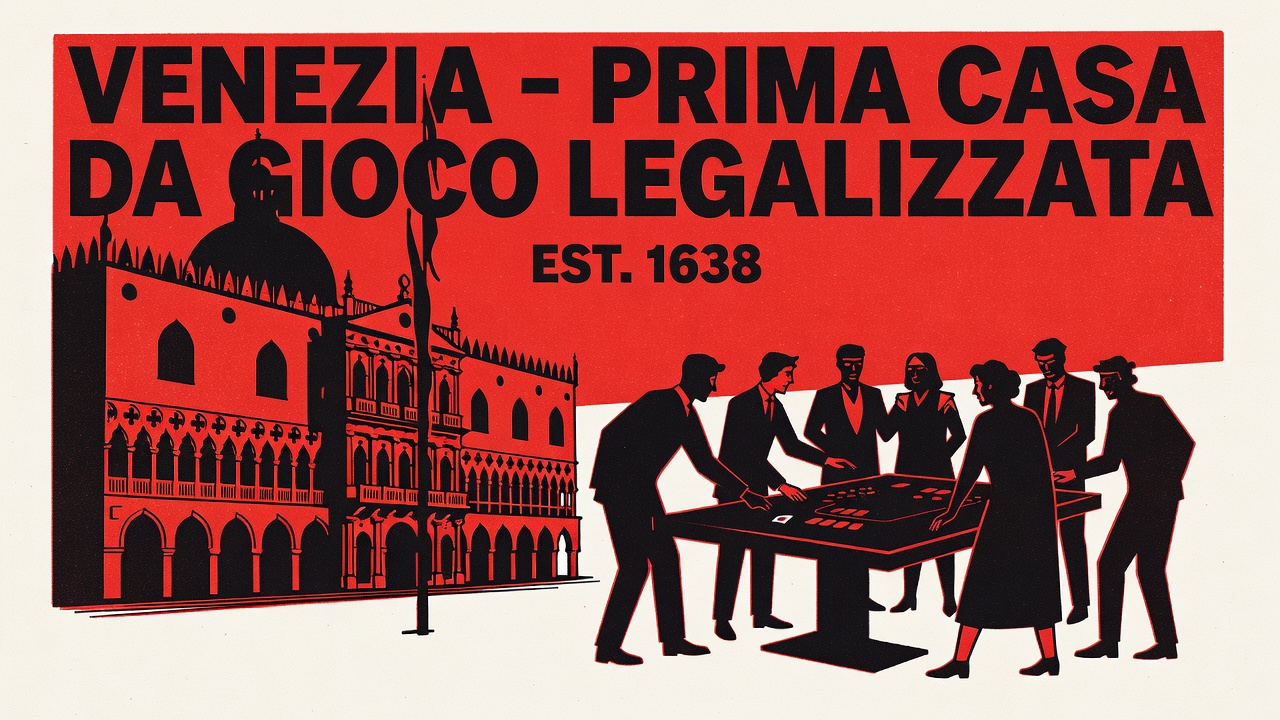
The Ridotto was a converted palace in Venice, opened in 1638 as a licensed gambling establishment. It operated under state control, which meant the state got a cut of the games in exchange for providing security and regulation. That's the entire model: people want to gamble, and if you're going to have gambling, it's better when someone competent is running it.
Why Venice Created It
Venice in the 17th century was a trading republic in decline. The spice routes were shifting, competitors were rising, and the old certainties were eroding. Money that would have gone to the state treasury through commerce was now going into private games in back rooms.
The Venetian Senate made a calculation: gambling was going to happen regardless. Venetians would play dice and cards with or without state permission. The underground games enriched private operators and corrupted officials. The choice wasn't between gambling and no gambling. It was between uncontrolled and regulated.
So Venice licensed it, taxed it, regulated it. This is not a new argument. Governments have been making it for 400 years.
How It Worked
The Ridotto required masks for entry, which served a simple purpose: it let wealthy merchants gamble without their business partners knowing they'd lost money. The mask separated the man from his choices. When he left, he could be a different version of himself.
The games were simple: faro, mostly, which requires no skill. The odds were disclosed. The rules were fixed. State-appointed croupiers ran the tables. It sounds orderly because it was; part of the point was removing the chaos that private games created. No cheating because the state watched. No disputes because the house rules were written down.
Who Gambled There
The Ridotto was expensive to enter, which meant wealthy people and some nobles. That part mattered more to Venice than it did to modern societies. A wealthy Venetian gambling away money was seen as money staying within the system rather than going to foreign powers or being hoarded. There was no moral panic about it. There was calculation.
People who lost badly would sometimes ask for a bailout or reduced debt. Sometimes the state would negotiate. Most often, losing was the cost of being allowed to gamble at all.
Why It Closed
The Ridotto closed in 1774, not because gambling was seen as immoral, but because Italy's political structure was changing. Venice's independence was ending. The incoming French Republic didn't need the revenue. Gambling became underground again in Venice for about 150 years.
The closure shows something important: whether gambling is legal depends mostly on government finances and political stability, not on any moral assessment of the activity itself. The same society that approved the Ridotto as necessary ended it as inconvenient.
The Lasting Model
What the Ridotto demonstrated was replicable and has been replicated: you can run gambling legally if you're honest about the mathematics and clear about the rules. You can reduce harm by standardizing games and eliminating cheating. You can't eliminate the pain of losing, but you can prevent the additional pain of being cheated.
Venice's choice was pragmatic. People want to play games of chance. Some will lose more than they can afford. That's a problem, but it's a problem that exists whether you license it or not. At least with a license, you get revenue and the ability to set basic standards.
Every legal gambling jurisdiction since has wrestled with the same dilemma. The Ridotto solved it by accepting the premise that some people will gamble with their rent money, and that your job as a regulator is to make sure at least the games are fair.