The Before Time: Poker as Underworld
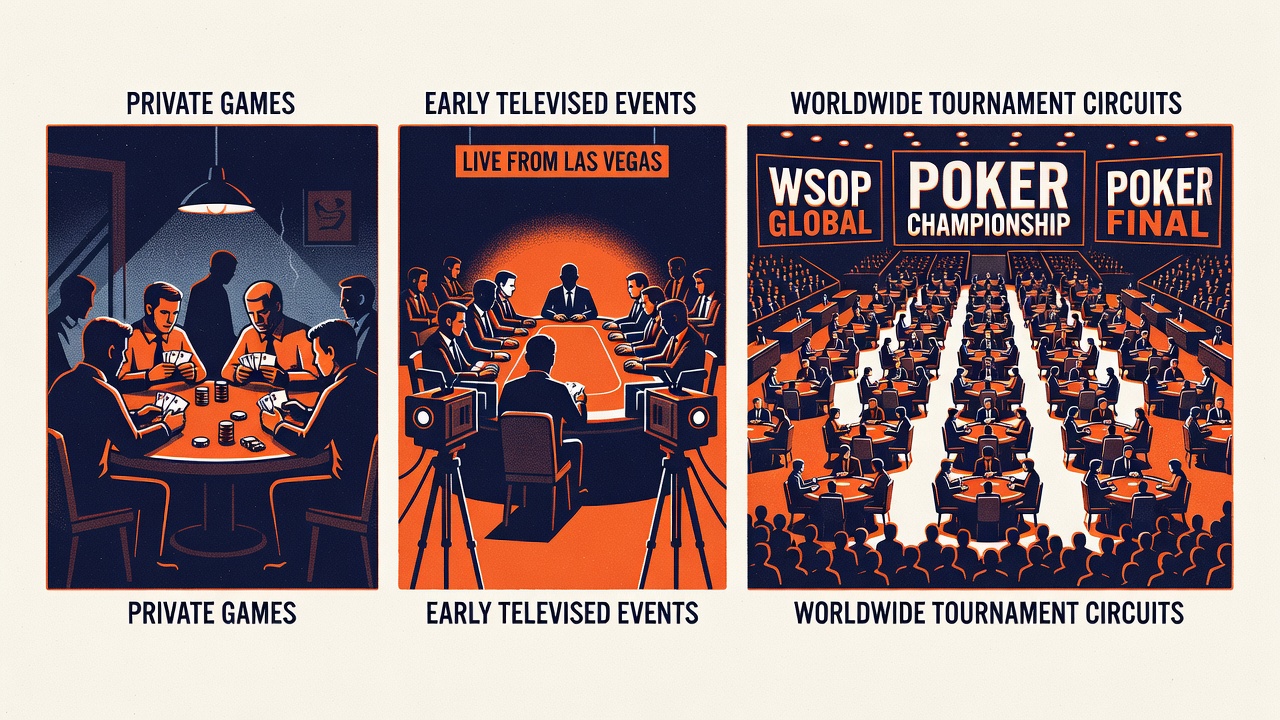
In the early 1990s, poker was a game played in three places: legitimate casinos in Las Vegas and Atlantic City, illegal back rooms in every major city, and home games in apartments and houses across America.
Professional poker players were, to the broader culture, essentially small-time criminals. They had handles, not names. They traveled constantly. They dressed expensively because they'd won money but lived on the edge because variance meant they could lose it all in a bad month.
Mike Sexton was a notable exception: a player with enough charisma and stability to be recognized outside the poker community. But even Sexton wasn't famous. He was famous to people who played cards.
The Catalyst: Chris Moneymaker
In 2003, a 27-year-old accountant from Tennessee with the last name Moneymaker qualified for the World Series of Poker Main Event through an online qualifier. He paid $39 for the online tournament and won a $10,000 seat in the real thing.
He won the tournament. He beat professional players. He took home $2.5 million.
The story was narrative gold. An amateur. A guy with an actual job who played poker online, beat pros, became wealthy. Every casual player in America felt like that could be them.
The Hole Card Camera
Before 2003, poker on television was boring. You watched people sit at a table and fold cards you couldn't see. Then they'd suddenly go all in and someone would win. You didn't know why.
Introducing the hole card camera (or "lipstick camera") changed everything. Now viewers saw what the players had. You understood the decisions. You understood why someone would bet aggressively or fold.
Poker became comprehensible as drama. It became sports.
Television Expands the Talent Pool
When poker was only visible in casinos, you became a professional by moving to Vegas, grinding small stakes, and slowly building a bankroll over years. It was a closed ecosystem.
When poker was on television, millions of people saw it and thought: I could do that. They started playing online. Online poker rooms created infrastructure for amateur players to learn the game without being destroyed by professionals immediately.
Within five years of Moneymaker's victory, there were 50 million online poker players. The talent pool exploded.
The Online Boom
PartyPoker, PokerStars, and Full Tilt became the dominant platforms. They sponsored professional players. They promoted themselves on television. They made online poker feel legitimate.
An amateur in Ohio could now play poker against professionals without leaving his house. The barrier to entry dropped from "move to Vegas and find a game" to "log in and click a button."
The Sponsorship Economy
When poker went mainstream, sponsors appeared. Energy drink companies sponsored players. Sunglasses companies sponsored players. Card manufacturers. Hotels. Casinos.
A professional who was good on camera could earn more from sponsorships and television deals than from actually playing poker. This was new. Before television poker, you made money by winning pots. Now you made money by being recognizable.
The Decline and Resurgence
In 2006, the Unlawful Internet Gambling Enforcement Act shut down most online poker in the United States overnight. PokerStars and Full Tilt withdrew from the US market. Suddenly, the talent pipeline dried up.
For five years, poker's growth stalled in America. Television ratings dropped. The number of amateur players declined.
But poker had already become culturally embedded. It was no longer a fringe activity. It was in movies. It was in television. It was in mainstream conversation.
The Global Expansion
While poker stalled in America, it exploded everywhere else. European poker rooms thrived. Asian players entered the game in huge numbers. The World Series of Poker stopped being a Vegas-only event and started holding regional tournaments worldwide.
Professional poker players from Russia, Germany, Spain, and China started winning major tournaments. The talent pool was no longer concentrated in Las Vegas.
Why It Stuck
Poker succeeded as a spectator sport where other games failed because it has built-in drama. Every hand is a story. Someone has a secret (hole cards). Information is revealed. Tension builds. Money changes hands.
This is why chess remains a niche spectator sport: there's no hidden information. Both players see all the pieces. The tension is intellectual, not dramatic.
Poker's hidden information creates narrative. Spectators can play along mentally. They can predict what a player should have. They can feel satisfied when that prediction is correct.
The Cultural Integration
By 2010, poker had moved from "something illegal people do" to "a recognized sport with professional players, sponsorships, and legitimate venues."
This took 15 years: from underground game to Moneymaker's victory to full mainstream acceptance. The speed was remarkable because media was moving fast and poker's structure was perfect for that media.
A game with hidden information, dramatic moments, and large sums of money changing hands was always going to work on television. It just took Chris Moneymaker and a hole card camera to make people realize it.