I sat in a betting shop in East London, the kind with worn carpeting and men watching racing form on screens mounted to walls. The owner, Marcus, knew every regular by name. One of them, Trevor, had been coming in for seventeen years.
Trevor came in Tuesday and announced he had set a deposit limit. Five hundred pounds a week. He said this to the room like it was a covenant. Marcus nodded. I watched.
Tuesday's limit meant Trevor could deposit no more than five hundred pounds in a seven-day period. The software enforced it. If he tried to deposit more, it refused. This felt powerful. But Trevor was back Wednesday with thirty pounds from his pocket (physical cash, not a deposit), and Wednesday his five-hundred-pound limit reset because he had hit the calendar boundary. By Thursday he had deposited again. Two days left in the week, he had already moved his limit to six hundred pounds. The shop owner helped him with the paperwork. Three pages, a signature, submitted.
This is the deposit limit in practice.
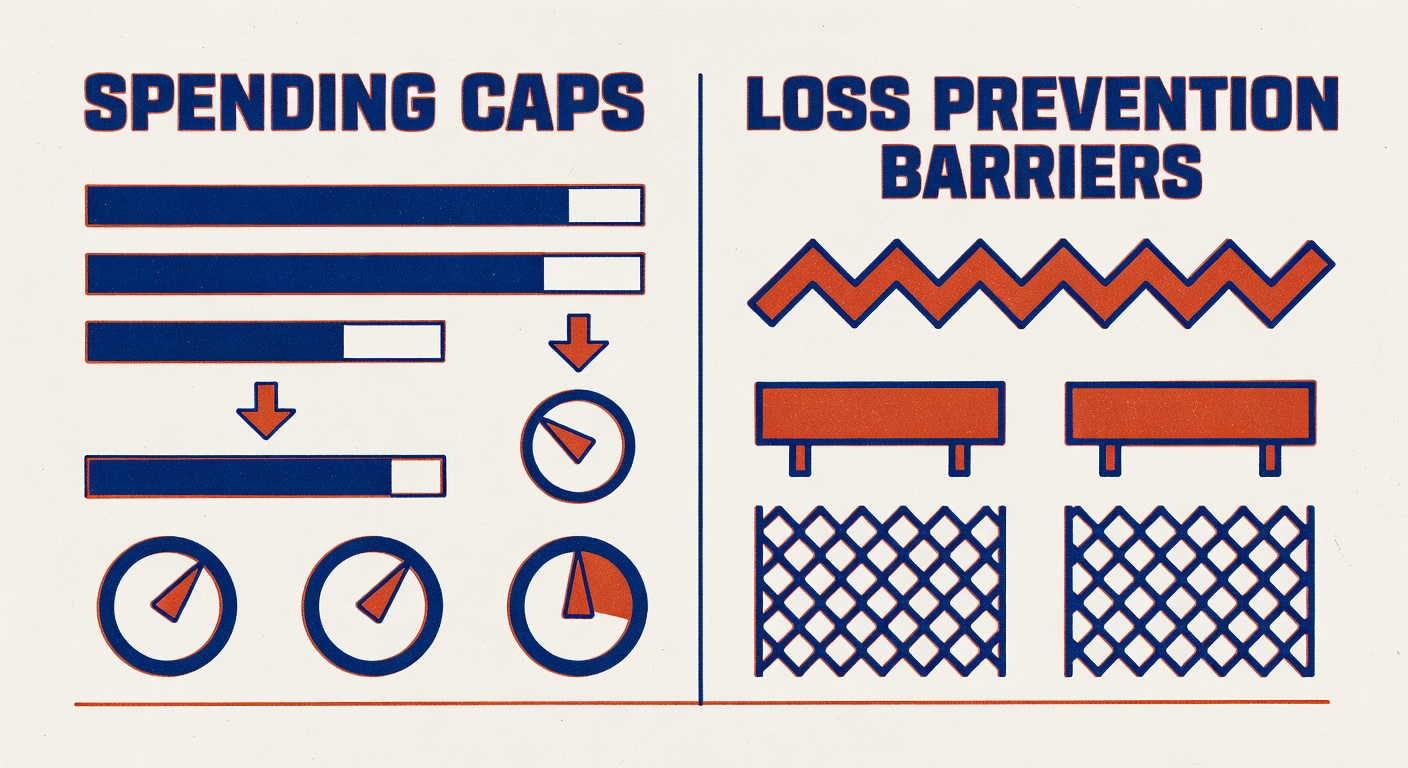
A loss limit is different. A loss limit is: you cannot lose more than X in a given period. If you have lost that amount, the account locks. You cannot place any more bets. You cannot deposit. You cannot withdraw the remaining balance until the period resets. It is a hard stop, not a soft request.
Why Deposit Limits Fail
Deposit limits appear in responsible gambling frameworks everywhere. UK Gambling Commission. Swedish SPELINSPEKTIONEN. Malta Gaming Authority. They are published as a core tool. They are almost useless.
Here is why: a deposit limit addresses the wrong variable. It controls entry (money coming in). It does not control exit (money going out) or duration (time spent). A player with a 500-pound deposit limit can arrive at a betting shop at 10 AM and lose 500 pounds by 3 PM, or play with that 500 pounds for six hours. The limit does not distinguish between these. A chronic bettor facing financial pressure will often increase their bet size to lose their limit faster and free up a new day for play. The deposit limit incentivizes higher stakes.
Deposit limits are also circumventable. You set a five-hundred-pound weekly limit on one site. You have five other accounts across five other operators. You deposit five hundred pounds on each. Total exposure: three thousand pounds. Each operator confirms you are compliant with your limit. None knows about the others. The player is complying with each limit while exceeding their personal risk tolerance by six-fold.
The ethnographic observation is important here: the problem bettor knows the tools exist. They know deposit limits are toothless because they have used them. Setting a deposit limit is often part of the ritual of gambling. You set the limit, feel morally absolved, and play. When you hit the limit, you wait for it to reset or you increase it. The limit is performative. It is the appearance of control.
Loss limits force a structural intervention: you cannot lose money you do not have, and you cannot lose more than the limit allows.
A loss limit works differently. After you have lost three hundred pounds in a day, the account locks until the period resets. You cannot continue. You cannot chase losses with a fresh deposit. The mechanism is involuntary. It removes choice.
But loss limits have a critical flaw: they measure losses in currency, not in time. A player who loses 300 pounds in fifteen minutes experiences a different neurological response than a player who loses 300 pounds over six hours. Both hit the limit and stop, but the one who lost quickly is more likely to return immediately when the period resets. The loss limit prevents the escalation within the current session but does not address the next session.
Moreover, loss limits can backfire. A player approaching a loss limit will often accelerate their betting and increase their stakes, trying to either recover before hitting the wall or maximize their remaining "loss budget." This is documented in the gambling disorder literature (Schottler, 2019): players given a hard boundary will sometimes increase risk-taking near the boundary.
What actually works is what no operator voluntarily implements: session limits combined with mandatory cooling-off periods. A player can play for sixty minutes. Then the account is locked for twenty-four hours. No reopening, no exceptions. A player approaching any loss limit gets a mandatory 7-day cooling-off period, not a reset.
Trevor never adopted a loss limit. He would not. A loss limit would have stopped him from playing, period. The deposit limit let him continue the theater: I am responsible, I have a limit, I am in control. The limit existed on paper. His behavior did not change. He cashed out his account three weeks after setting the deposit limit, after losing six thousand pounds across a month. He told Marcus it was "just a rough patch." He will be back next week.
The distinction matters for regulation and for personal strategy. If you are setting limits, a loss limit is structurally superior to a deposit limit. It actually stops play. A deposit limit only delays it. The operators push deposit limits in their responsible gambling marketing because deposit limits change almost nothing. They are the regulatory equivalent of a warning label on a cigarette box. They make operators compliant without impacting their revenue.