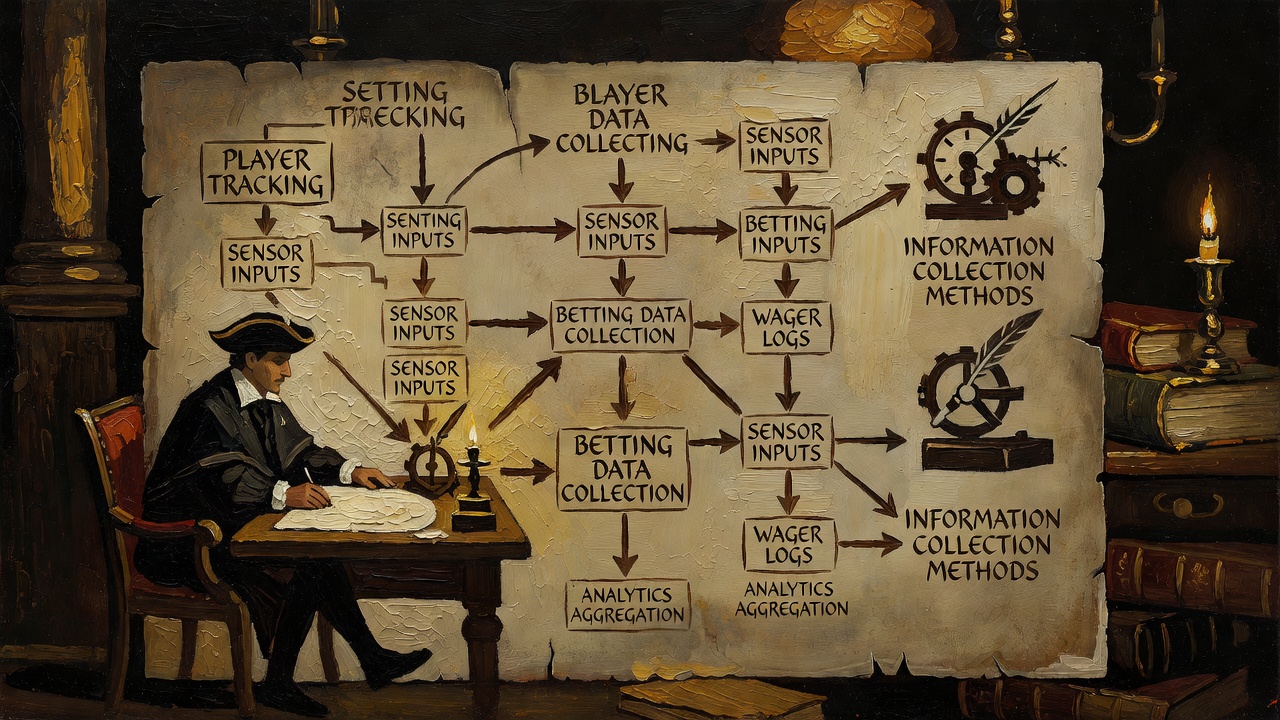
The casino knows your name, your address, your phone number, and where you work. That's the baseline. But it doesn't stop there.
Every game you play is logged. What time. For how long. Which game. How much you bet. Whether you won or lost.
Over time, the casino has built a psychological profile of you more detailed than most marketing companies maintain.
The Regulatory Requirements
KYC (Know Your Customer) means casinos verify identity: government ID, utility bill, proof of address. They do this to comply with regulations and to prevent fraud.
AML (Anti-Money Laundering) means casinos monitor for suspicious patterns: large deposits, rapid withdrawals, deposits from unusual countries.
These regulations exist for good reasons (preventing money laundering, funding terrorism). But they require casinos to collect and store extensive personal information.
The Voluntary Data
Beyond regulatory minimums, casinos collect optional data: income, employment, source of funds. Some players provide this thinking it helps them qualify for better bonuses.
It doesn't. But the casino keeps the data.
Casinos also collect device data: your phone type, operating system, browser, IP address. They build a fingerprint of how you access the casino.
The Behavioral Tracking
Your betting patterns are tracked: do you prefer slow or fast games? Do you bet bigger during certain hours? Do you chase losses?
Casinos use this data for marketing (they'll send you promotions for games you like) and for fraud detection (unusual patterns get flagged).
But the data has other uses. Some casinos trade this behavioral data with third-party marketing companies.
The Player Lifecycle
Casinos segment players: new players, loyal players, whales, at-risk players.
An "at-risk" player (someone showing problem gambling signals: rapid escalation, late-night play, chasing losses) might get flagged differently than a recreational player.
Some casinos have responsible gambling interventions for flagged players. Some don't.
The Dispute Record
If you file a complaint, that's documented. If you dispute a charge, that's documented. Your complaint history becomes part of your profile.
Players with many disputes might be deprioritized for customer service or might face restrictions on new accounts.
The Regulatory Handoff
Casinos report to gaming authorities. These reports include aggregate data: how many players, what they lost, complaint statistics.
Individual player data might be reported if the player is flagged for problem gambling or suspicious activity.
The Cross-Casino Tracking
Some jurisdictions maintain shared exclusion lists. If you self-exclude from one casino, other casinos in that jurisdiction are supposed to know.
The effectiveness varies. Some jurisdictions enforce it rigorously. Others don't.
But the data is being shared across operators.
The Data Retention
Casinos are typically required to keep player data for 5-7 years after account closure.
Some keep it longer.
So even after you delete your account, the casino still has your behavioral history.
The Risk
Data breaches happen. If a casino's database is compromised, your behavioral profile is exposed.
This includes sensitive information: how much money you gambled, when you played, what games, whether you won or lost.
The Mitigation
Request a data access report. Most regulated casinos will provide it under privacy laws.
Request deletion of data that isn't legally required. Most will comply.
Understand that using the casino requires accepting data collection. If you value privacy, play in person with cash. You can't gamble online without providing data.
The Reality
Online casinos have more detailed psychological profiles of their players than most social media platforms.
The profiles are used for marketing, for fraud prevention, and increasingly for prediction: which players will return, which will escalate, which will quit.
If you gamble online, assume everything is being collected and analyzed.