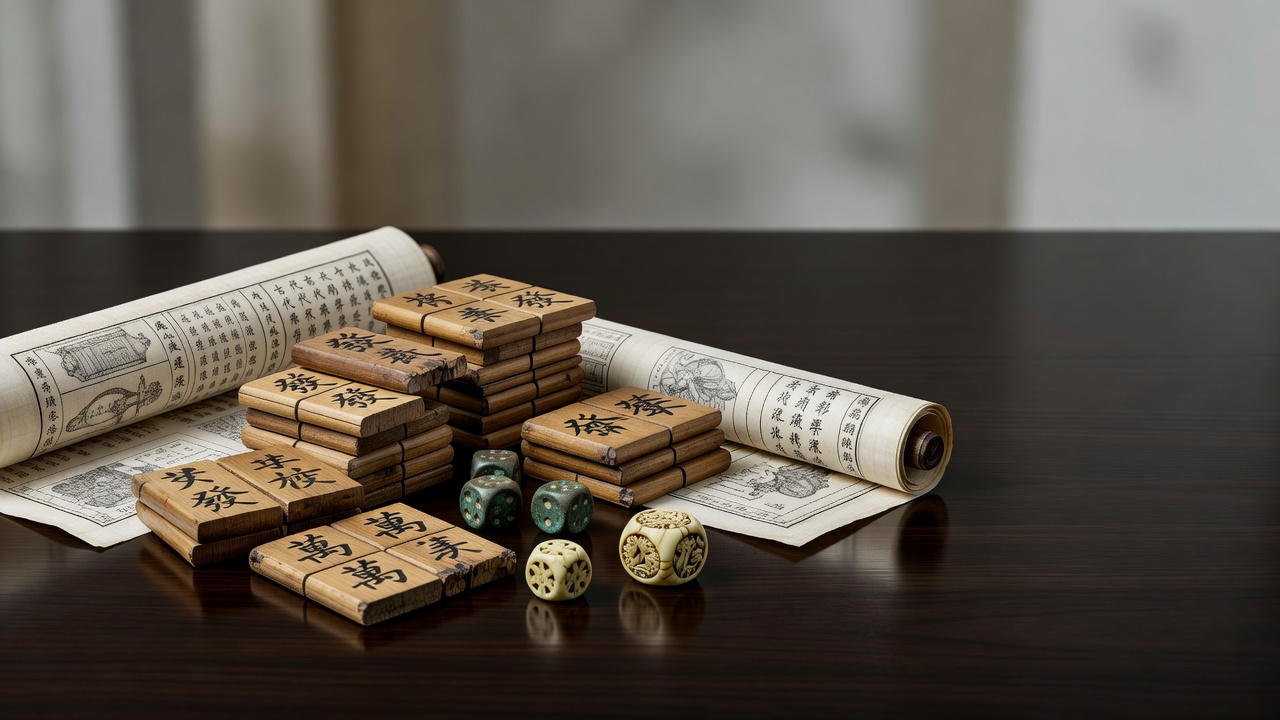
A common misunderstanding: people assume gambling started in the West, with casinos and cards and the legal frameworks that grew around them. Not true. Gambling is at least three thousand years old. Ancient China had it. Egypt had it. Rome certainly did. What makes China interesting is that it invented the lottery, an organized form of gambling that governments themselves operated. That's a different animal.
Q: When did gambling first appear in ancient China?
A: Archaeological evidence from the Shang Dynasty (1600-1046 BC) shows bone and shell dice. These were used in divination rituals, not games, at least not initially. By the Zhou Dynasty (1046-256 BC), gambling with dice was well established. The Analects of Confucius mention it as a vice, suggesting it was common enough to be worth condemning. People were wagering on the throws.
Q: Did ancient Chinese governments regulate gambling?
A: Not at first. Early gambling was private, between individuals. But by the Han Dynasty (206 BC-220 AD), the government realized gambling could be a revenue source. They began licensing gambling houses. This is the first recorded instance of state-sanctioned gambling. Operators paid the government a tax. The government got money without running the tables themselves. This model didn't originate in the West. It came from China, two thousand years ago.
Q: What about the lottery specifically?
A: The first state-run lottery appears in the Song Dynasty (960-1279 AD). The government sold tickets to fund military operations and public works. Citizens purchased tickets with the hope of winning prizes. This is genuinely the first lottery in the world. Europe didn't have them until the 14th century. The structure you see in modern lotteries: numbered tickets, random drawing, government operation, percentage retained by the house: all of it came from Song Dynasty practice.
How It Actually Functioned
Tickets were affordable. The masses could participate. The house edge was transparent (or as transparent as anything was in a pre-printed-regulations society). Winning tickets were drawn publicly. Winners collected their prizes. The government kept the remainder. This was brilliant from a fiscal perspective. You're not raising taxes, which causes revolt. You're asking people to voluntarily hand you money in exchange for a small chance of winning more. They do it willingly.
Q: Did gambling have social consequences in ancient China?
A: Yes. Even in ancient texts, there are mentions of people losing family property, falling into debt, engaging in criminal behavior to finance gambling habits. The problem is not new. Confucian scholars condemned gambling as corrupting virtue. Buddhist and Taoist texts warned against it as a path to suffering. These criticisms sound modern because the underlying human behavior is unchanged. Gambling has always attracted people seeking quick returns, and addiction has always been real.
Q: Why did China develop gambling culture differently than other civilizations?
A: Possibly because probability and mathematics developed earlier in China. The Chinese understood probability through I Ching divination systems and early mathematical texts. They could calculate odds. They could design games with specific house edges. This technical sophistication allowed them to organize gambling efficiently. They could run a lottery because they understood the math underneath it.
The Lasting Legacy
When governments today run lotteries, they're following a template designed in 10th-century China. The structure is identical. Modern state lotteries are, in essence, digitized versions of Song Dynasty innovation. The house edge stays with the government. The players accept unfavorable odds because the hope of winning appeals more than the math of losing.
Ancient China didn't invent gambling. It invented the business model. It industrialized gambling. It proved that governments could profit from it. Every state lottery running today, from Powerball to EuroMillions, is a direct descendant of Chinese innovation. That matters because it means the current form of organized gambling has a longer history than most people assume. It's not a recent Western invention. It's ancient. It's proven. It works.