I spent 40 years inside slot cabinets. Started with the Bally 777 in 1984, which had a simple mechanical RNG. A motor turned a wheel, the wheel had 20 stops, your win was determined by where the wheel landed when power cycled. No computer. Just physics and a spring.
Then came the electronic machines. Aristocrat's 1985 model was the first I worked on with a software RNG. They ran a linear congruential generator on a Motorola 6809 processor. You could predict the outcomes if you knew the seed and the modulus. Most operators didn't care. The law said "random enough," and that was good enough.
Now everything runs on sports-betting algorithms. Machine learning. Neural networks. I don't own the code anymore. The casino buys it from companies like SBTech or GVC. And I can't diagnose it the way I could diagnose a Bally cabinet. The machine is invisible.
What Changed
Oldline sportsbooks set their odds by hand. A person sat in a room and said "the Chiefs are 7-point favorites, the line opens at minus-110." That person had experience. They watched games. They knew public tendencies. They adjusted when money came in at one side.
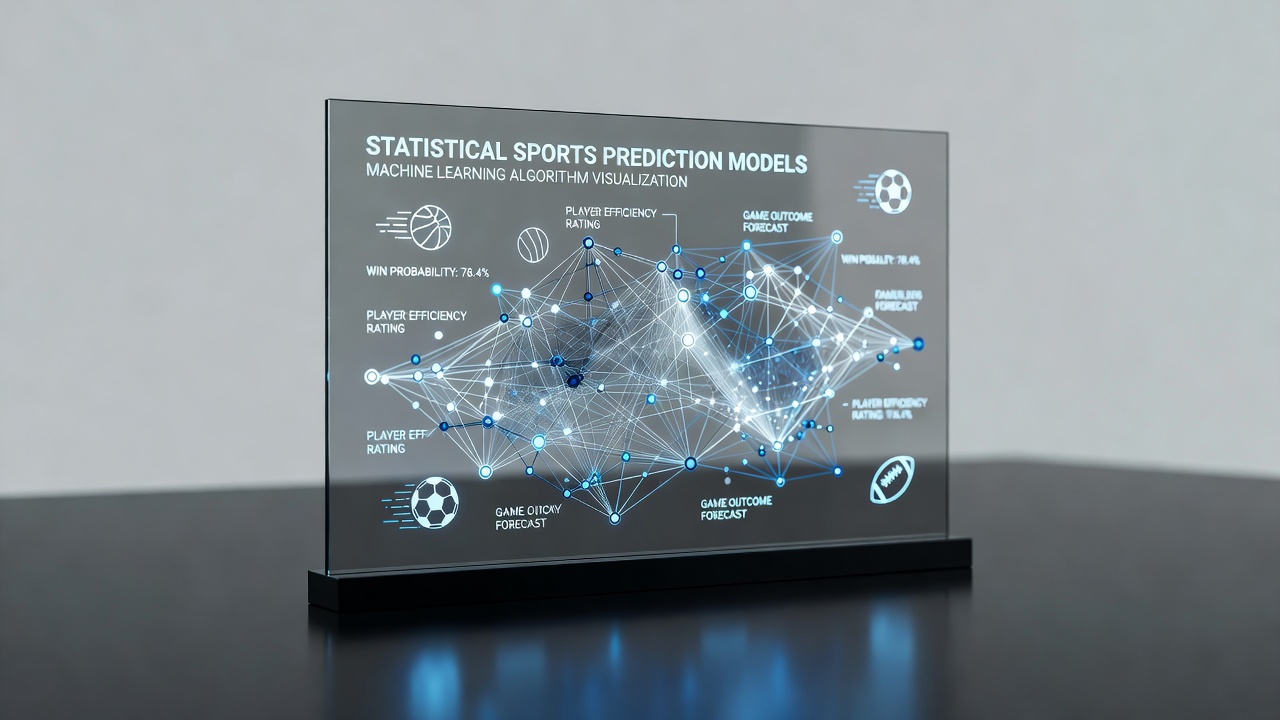
This still happens, but the adjustment is now driven by machine learning models. The model predicts what the true probability is of a team winning. The book compares that to the implied probability of the odds. If the model says 52% (the true odds) and the market is pricing 48%, the book moves the line until the prices meet.
The model is trained on historical data. NFL games from 1990 to present. College football. Weather conditions on game day. Vegas injury reports. Home-field advantage. Strength of schedule. The model ingests all of it and spits out a number.
Older models used linear regression. Your win probability is 3% times win-loss record, plus 2% times strength of schedule, plus 1% times home field. Simple math, transparent outputs. But linear regression can't see interaction effects. It can't recognize that "this team against THIS opponent is different from that team against a general opponent."
Neural networks can. They build layers. One layer predicts offensive strength. Another predicts defensive strength. Another learns the match-up history. They interact in ways that the model's creators don't always understand. It's a black box that makes better predictions than the transparent model.
How Models Work in Practice
Let me use the Super Bowl as an example. The week before the game, you have injury reports, practice data, playoff history, regular-season record, strength of schedule, travel distance, home-field advantage (or disadvantage), weather forecast, public betting patterns, sharp money patterns.
The model processes all of it. It outputs a number: 55%. This means the model predicts a 55% win probability for the home team. The sportsbook converts this to odds. 55% odds is minus-122 on the moneyline (you risk 122 to win 100). The book sets the line at minus-115 (you risk 115 to win 100) to keep some margin for themselves.
Money comes in. The public bets the home team heavily. The sharp money bets the road team. The model updates. New data: injury confirmation at 5pm Friday. The model re-runs. The probability drops to 52%. The book moves the line to minus-109. More money comes in at the new price.
By game time, the line has moved 10 times. Each move was driven by the model seeing new data and updating its prediction.
What the Models Get Wrong
Models are trained on historical data, but the future is not the past. A model trained on 30 years of NFL games never saw Patrick Mahomes. When Mahomes showed up, the model had no template for "young QB with arm talent and mobility who is also smart." It underestimated him for two seasons until the training data caught up.
Same with the rise of pass-heavy offenses. The model was trained on decades of run-first football. It underweighted passing ability. Books that used outdated models gave away value on high-passing teams until they updated their training data.
Why I Care
I care because the models are opaque, and I can't diagnose them. On the old machines, I could read the code. I could tell you why a spin landed on a cherry. "The seed generated 14,356. The modulus is 32,768. Fourteen thousand landed on cherry." Transparent. Verifiable.
On the new models, I can't do that. The input is hidden. The weights are hidden. The output is a number. Does the model have a bias against home teams? I can't tell you. The creators might not know either.
This matters because bettors assume the model is neutral. But models inherit the biases of their training data. If the training data underweights a particular scenario, the model will too. If the training data is from an era before online betting, the model won't understand how public money affects closing odds.
The old way, you could complain about the RNG. "Your machine is rigged." The casino had to let you audit it. The new way, you complain about the model. The sportsbook says, "Our model is proprietary." And you have no recourse.
This is the change I've seen. From machines you could understand to systems you can't. The math is better. The predictions are more accurate. But the trust is gone.