
The peculiar thing about the Tommy Hyland syndicate, which operated blackjack teams across North America from the late 1970s onward, is not that it was particularly secretive or glamorous. Rather, it was relentlessly consistent in its application of card-counting methodology, proving something casinos had long resisted: that disciplined, mathematically sound play could generate sustainable profit over enormous sample sizes.
Tommy Hyland himself remained largely unknown to the public, which was precisely the point. Whilst MIT students appeared in documentaries and gave interviews, Hyland's operation grew quietly. The syndicate expanded from a small group of counters into something more resembling a small firm, complete with bankroll management protocols, variance reduction strategies, and rotating personnel designed explicitly to avoid the pattern recognition that casino security relied upon.
The Scale of Operation
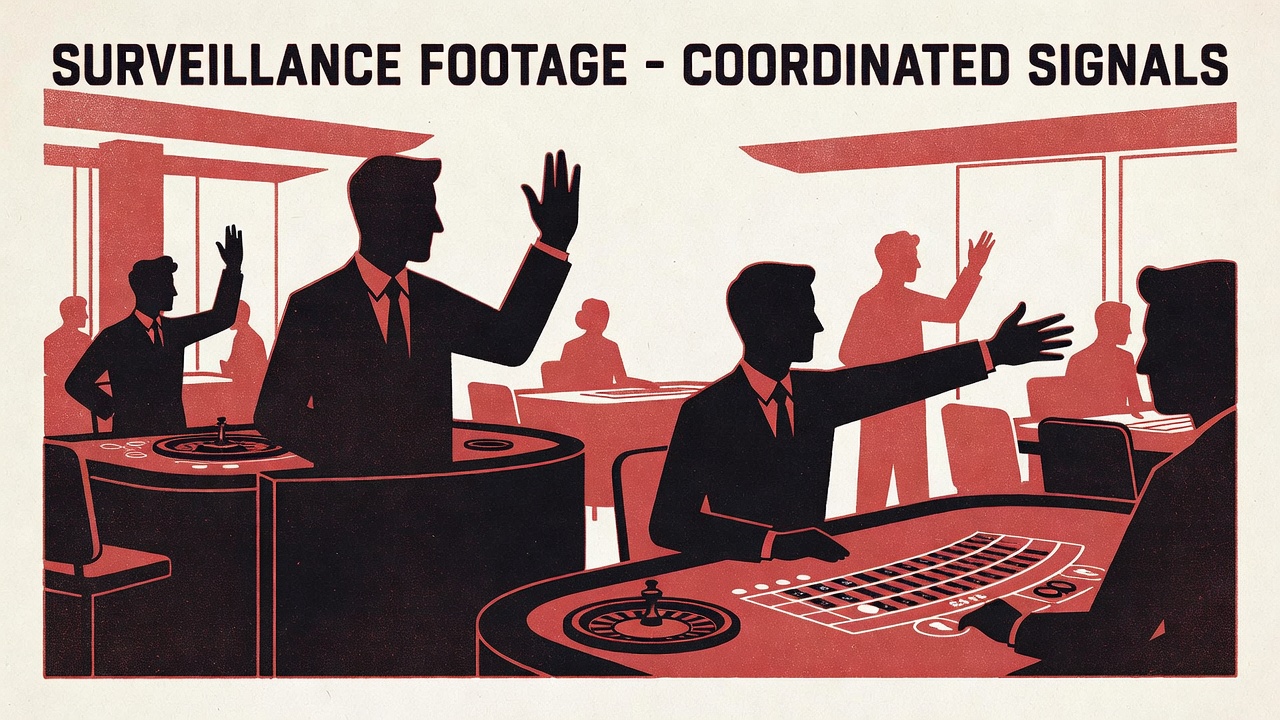
By the 1980s, Hyland's team had grown to roughly 50 active counters, sometimes more. They worked in cells, with spotters and back-counters working in concert to minimize detection. The operational sophistication was remarkable for its era: they employed a form of advanced shuffle tracking that went beyond simple running counts, they maintained detailed records of casino conditions and surveillance patterns, and they rotated their personnel with the precision of a military operation.
The financial stakes were substantial. A well-capitalised counting team, playing at $100 to $500 per hand across multiple casinos, could generate yearly earnings in the hundreds of thousands, though variance meant that months could swing wildly. The Hyland operation understood this volatility and managed it accordingly, which may explain its longevity where others burned out or faced legal pressure.
Casinos Respond
Casino management reacted with their typical combination of technological investment and regulatory pressure. Continuous shufflers were introduced as a direct counter to card-counting. Multiple-deck shoes increased the computational complexity of running counts. Security protocols tightened. The 1990s saw casinos deploying increasingly sophisticated eye-in-the-sky systems and training floor personnel to identify counters through betting patterns.
Yet the Hyland operation adapted. They employed camouflage betting patterns, losses intentionally taken at certain tables to appear as regular tourists, and sophisticated bankroll management that kept them within the bounds of legal play. They were not cheating, which was the crucial distinction; they were simply playing blackjack more skilfully than the house expected anyone to.
The Philosophy
What separated Hyland's group from the romantic notion of card-counting was its fundamental cold-bloodedness. There was no discussion of beating the house through clever thinking or lucky streaks. The operation was built on mathematics. Edge is edge. Variance is managed or it destroys you. A counter who played hunches or deviated from the system was out; the operation could not afford such indulgence.
This approach meant that the syndicate remained active far longer than other groups. By the mid-1990s, when casino countermeasures had become nearly total, the Hyland team had already evolved its strategies sufficiently to remain profitable. They had also likely accumulated enough capital to absorb downturns that would bankrupt smaller operations.
The Decline and Legacy
The era of advantage play in American casinos was never about sustaining growth indefinitely. Casinos, given sufficient financial incentive, will eventually close any exploitable weakness. By the early 2000s, the conditions that allowed large-scale card-counting had largely vanished. Continuous shufflers, facial recognition, and the simple economic fact that casinos were now willing to exclude skilled players made the game practically impossible.
What remains is Hyland's proof of concept: that a small group of disciplined, mathematically proficient players could sustain a two-decade advantage against an institution that employed more resources, more expertise, and more information. They won not through brilliance but through consistency, bankroll discipline, and the willingness to treat gambling as a craft rather than an adventure.
The Hyland operation never received the cultural attention of other gambling stories. There were no films, no autobiography, no grand narrative of romantic struggle. A group of Americans simply played blackjack better than expected and disappeared when the conditions that made that possible ceased to exist. History remembers the spectacle more readily than it remembers the mathematics that actually won.


