In 2006, Terrance Watanabe walked into Caesars Palace in Las Vegas with a bankroll and left it richer by $40 million. By May 2007, he had lost $127 million in the same casino. This is not a story about stupidity. It is a story about how human irrationality, when amplified by loss aversion and mental accounting, can bury a successful businessman in six months.
Watanabe was not a casual gambler. He had made his fortune in pharmaceuticals. He was educated, wealthy, and by all accounts capable of rational calculation. Yet he sat at the baccarat tables at Caesars night after night, sometimes for 12 hours straight, chasing losses that mounted to the equivalent of his entire net worth.
The behavioral economist Richard Thaler identified a phenomenon he called "mental accounting." We do not treat all our money the same. We compartmentalize. You might keep $1,000 in your checking account and refuse to touch it, but happily spend $1,000 that you earned from a bonus or found as a windfall. Watanabe won $40 million early. This was windfall money. In his mental accounting, it lived in a different box than his earned wealth.
The Prospect Theory Trap
Nobel laureate Daniel Kahneman's prospect theory explains why Watanabe kept betting. Humans do not evaluate outcomes objectively. We evaluate them relative to reference points. If you are up $40 million and suddenly down $30 million, you are not thinking about your net position. You are thinking about a $70 million loss relative to your peak. That $70 million shortfall feels more real than any absolute number.
This is loss aversion. Losing $50,000 hurts twice as much as winning $50,000 feels good. When Watanabe was down $50 million, the pain of that loss created an intense pressure to bet bigger, hoping for a swing that would bring him back to his peak. This is the gambler's fallacy meeting prospect theory: the numbers have to swing back eventually, and my next hand could be the turn.
At Caesars, Watanabe was not just another player. He was a whale. The casino offered him free chips, comps, a private elevator to the high-limit rooms. Behaviorally, this created what Thaler calls "sunk cost bias." Watanabe had already lost so much that the chips felt like a return on his investment. Each comped chip was a signal that the casino believed in him, that he was a good customer, that he belonged in those rooms.
The Mathematics of Chasing
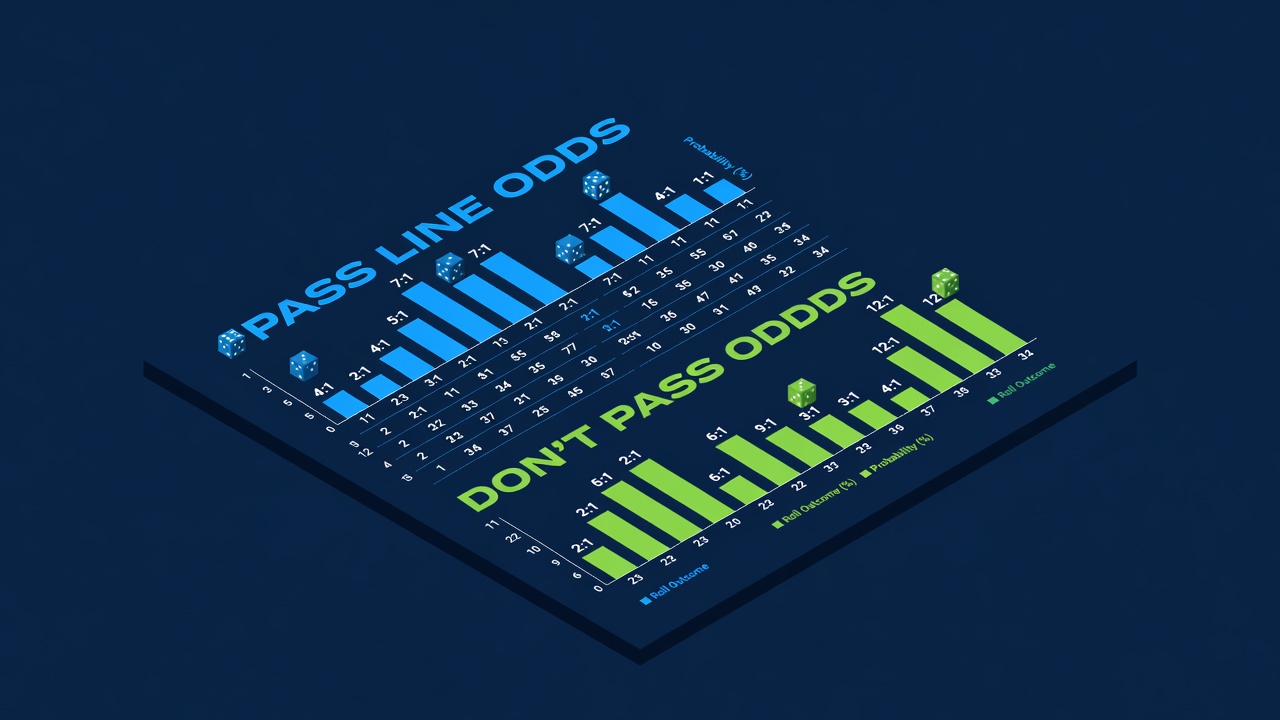
Baccarat has a house edge of roughly 1.06% on the banker bet, 1.24% on the player. These edges are low, which is why whales play baccarat instead of roulette. Low house edge feels like a fair game. It creates the illusion that the table is beatable with the right strategy or enough hands. Watanabe lost money on approximately 220 bets per hour. At $100,000 per hand, he was wagering $22 million per hour. The house edge ground him down methodically.
But the math is not the story. The story is that Watanabe kept playing because each loss created a new reference point. If he was down $90 million and lost another $10 million, the incremental pain of that $10 million was less than the pain of the $90 million loss. This is diminishing sensitivity. After you have lost everything once, a second loss barely registers.
Caesars never stopped him. Why would they? Every hour Watanabe sat at the table was an hour they were harvesting $235,000 in expected value. The casino accommodated his losses, extended him credit, and waited. Casinos do this because they understand prospect theory better than most gamblers. They know that a person in loss aversion mode is predictable. They will keep betting.
Watanabe eventually sued Caesars for $65 million, claiming they had encouraged pathological gambling. He lost that suit. The court found that he was a sophisticated actor who made his own choices. Behaviorally, this misses the point. When your brain is trapped in loss aversion, you are not making independent choices anymore. The casino simply knows how you are wired and turns that wiring against you.