You walk into a betting shop in Atlantic City circa 1998. The house smells like old money and cigars. The guy next to you is checking his Motorola pager for injury updates.
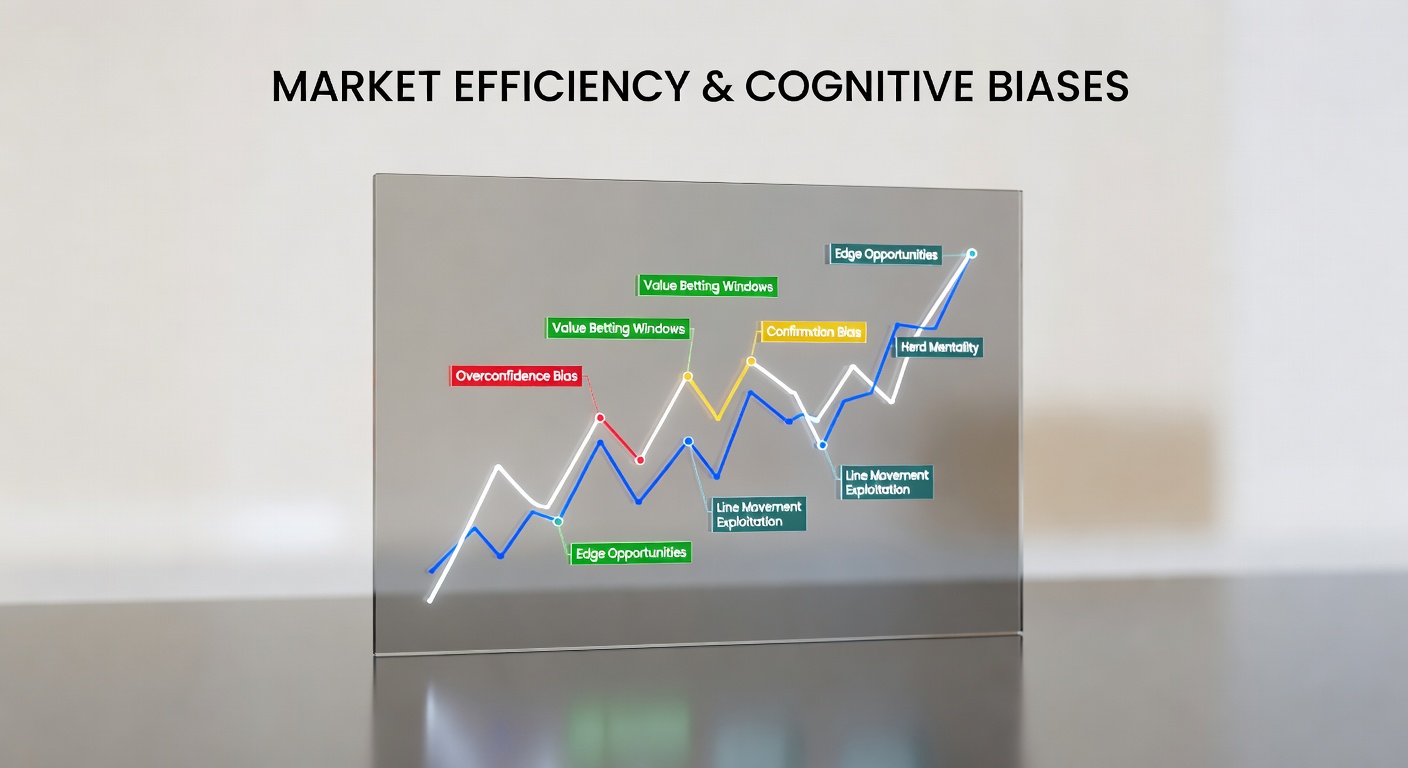
None of you know it yet, but you're all swimming against a current you can't see. Not luck. Bias.
The oddsmaker at the sportsbook isn't stupid. He's had 200 years of collective human psychology as his tutor. He knows exactly which bets people love to make for reasons that have nothing to do with value. And he prices accordingly.
Recency Bias
A team's quarterback just threw four interceptions last Sunday. You won't bet them this week. You think they've lost something. They probably haven't.
Recency bias says: the most recent information is the most important. But one game tells you almost nothing about a team's true strength. Two games tell you almost nothing. Four games tell you something real.
The sportsbook knows this. It adjusts the line based on actual performance over time, not the emotional reaction to this week's disaster. When you ban a team because of one bad game, you're making an emotional bet, not a mathematical one.
Anchoring
A team opened at three points. Now it's moved to five. You thought three was reasonable, so five feels like too much. You take the underdog.
That first number (three) is stuck in your head. The new information (five) gets compared to the anchor instead of evaluated on its merits. The sportsbook knew this would happen. It moved the line because something changed in the world. Not to trap you. To reflect new information.
But your brain treats the opening line like it's the "true" price, and the current price like an error.
Confirmation Bias
You decided the Chiefs are vulnerable this year. Now you see every data point that confirms this (one loss, a sloppy win, an injury report) and none that contradicts it (twelve wins, actually the league's third-best defense, their quarterback is still their quarterback).
You've decided the narrative. The numbers now serve the narrative instead of the other way around.
Home Bias
Your team is playing. You bet it, thinking you know something the market doesn't. You don't. You just want your team to win.
This is the oldest mistake in sports betting. Wanting and knowing are different. The sportsbook makes more money from bettors with home bias than from any other source.
Availability Bias
You remember the one time a team blew a 20-point lead. You're never betting them when they're favored by more than 10 points again.
But you don't remember the 47 times they won by that margin. Your memory supplies you with vivid examples instead of actual rates. Vivid beats frequent in human cognition.
The market doesn't have vivid memories. It has data. It wins.
The Gambler's Fallacy
A coin has come up heads five times in a row. Tail is "due." Actually, the coin doesn't know history. It has a 50-50 shot every flip.
Apply this to sports: a team has won five in a row. They're "due" to lose. Actually, they're a hot team. Regression happens, but not on schedule. Markets price in regression constantly.
Overconfidence
You've won three weeks in a row. You feel like you've figured it out. The line seems soft on a Sunday matchup. You go big.
Three wins don't prove skill. They prove variance. But your brain, now enriched by success, is running hot. You're making bigger bets with higher confidence. And you're wrong more often than the first week, you just don't notice yet.
Action Bias
There's a game on and you feel like you should bet it. You don't have a thesis. You just feel like action.
This is how casinos become mansions.
What to Do
Keep a spreadsheet. Before you place a bet, write down your thesis in one sentence. Not "the Bengals are good." "The Bengals are 8-2 ATS at home, the Texans are 3-7 ATS on the road, and the line is favoring the Bengals by only five points."
Then evaluate the thesis against the line. Would you bet at five? At six? At four?
When you win, review the tape. Was it skill or luck? When you lose, don't blame variance. Did your thesis hold up? Did the data support the bet?
The edge in sports betting belongs to people who remove their own emotions from the process. Not who have the best instincts. Not who follow the sharpest touts. People who treat betting like a job, with discipline, record-keeping, and the constant willingness to say "I was wrong about this."