I worked the road for eleven years. Las Vegas, Atlantic City, sometimes drove up to Connecticut or down to Mississippi where the comps were worse but the rules softer. You learn certain things when you're living out of motels and playing 40-50 hours a week. One of them: time becomes a weapon against you.
That's the whole point of session timeouts. They're not about security, though casinos market them that way. They're about stopping you from playing past the moment when your decisions stop being decisions.
The Early Years
Back in the 1990s and early 2000s, online casinos didn't have session timeouts. You could play for 18 hours straight. Some players boasted about it. Most of them went broke. The ones who lasted understood a simple fact: variance gets worse the longer you sit. Your true count drifts. Your bet sizing gets loose. You take stupid risks because you're tired and you've been losing and the next shoe is obviously going to go your way.
It never does.
Then regulations started requiring logout features. The UK Gambling Commission, the Malta Gaming Authority, others. They weren't being pious about it. They just saw the pattern in player losses. Longer sessions meant worse decisions, meant bigger losses, meant more complaints, meant regulatory attention. A timeout after 4 hours of play was cheaper than handling problem-gambling cases.
Why Timeouts Matter
Fatigue destroys your true count as much as emotion does. After hour five, you're misreading penetration. You're forgetting which suits have come out of the shoe. A soft 18 becomes harder to value correctly. You're making EV-negative plays because your brain is running on fumes and coffee.
Expectation and tiredness don't mix. Over a 500-hour sample, a counter should win. Over 5 hours with no sleep, a counter is just another person at a computer losing money.
The timeout interrupts that downward spiral. It's crude, but it works. You close the browser. You sleep. You come back fresh. Your decision-making resets.
The Format
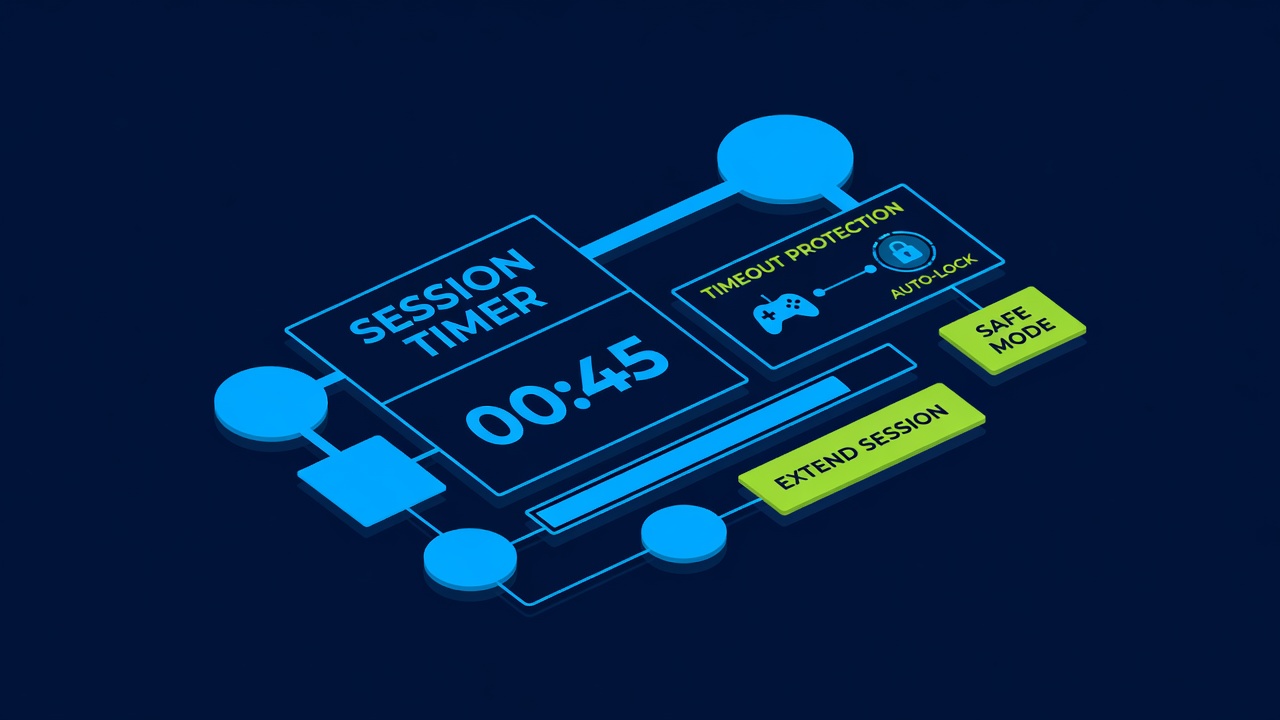
Most licensed casinos now have them. You play for a period, usually 1-4 hours depending on jurisdiction. Then you're locked out for a cooldown window, often 30 minutes to an hour. Some casinos let you set your own timeout limits, which sounds good in theory but is useless. No one gambling at 3am sets a strict timeout on themselves.
Higher-tier players sometimes negotiate shorter timeouts or exemptions. VIP programs at some casinos have less aggressive session limits because high-volume players generate more revenue and casinos assume they have their act together. They usually don't, but that's a different conversation.
What It Actually Prevents
A session timeout can't prevent someone from gambling money they shouldn't spend. It doesn't stop chasing losses; it just adds a 30-minute pause before the next chase. But that pause matters. It's the difference between a continuous downward spiral and a series of discrete decisions.
I've seen players come back after a timeout and realize they've lost $8,000 in the last 6 hours. The timeout forced them to look at the damage. Without it, they're still playing, still convinced the next hand resets the story.
For advantage players, timeouts are almost irrelevant. You count accurately, you take your edge, you quit when the conditions decay. Timeouts don't stop you; they just interrupt the monotony. You log back in tomorrow and continue.
For recreational players, they're a genuine safety feature. Not foolproof, nothing is. But real.
The Reality
Session timeouts exist because casinos learned that their own interests and player protection sometimes align. A player who loses everything they can afford to lose in one session generates legal liability and regulatory trouble. A player who takes small losses over multiple sessions causes less fuss.
The timeout is bottom-up product design: something adopted because it demonstrably reduced problem outcomes, not because anyone decided it was virtuous. That's the only kind of protection that actually works. The kind that's also profitable.