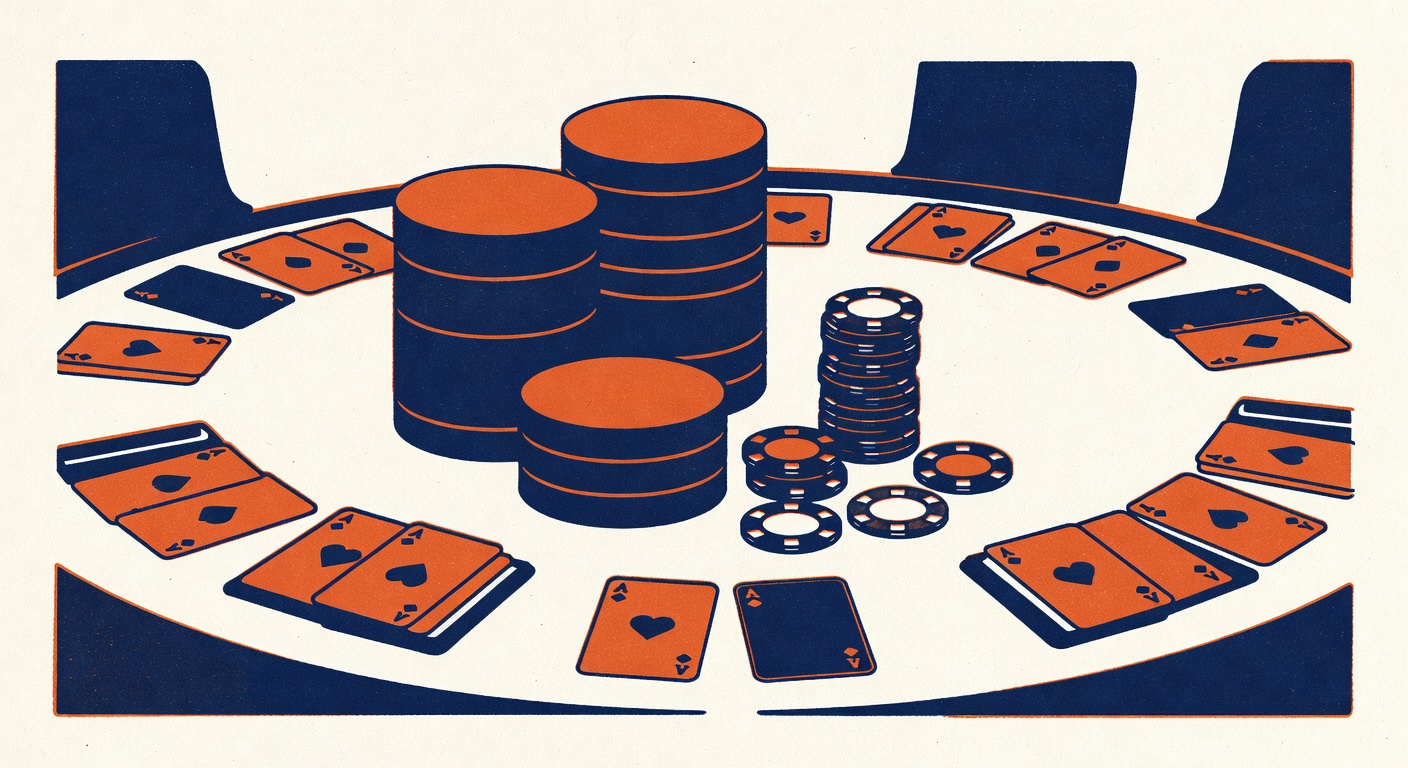
I watched my grandson play his first serious poker tournament. He started with 10,000 chips. By hour three, he was down to 2,000. The blinds were 500-1,000. He had two big blinds left. Most players, at this point, give up. They think the odds are against them. And mathematically, they are. But there is a way to play that is not defeat.
A short stack is four big blinds or fewer. At this point, folding slowly to zero is a losing strategy. You will fold three hands, then the blinds catch you and you are forced all-in with junk. Better to take control. When you have two big blinds, you have choices: fold, limp, or go all-in. Folding hands down is slow death. Going all-in is fast. At some point, speed becomes strategy.
The Math of the Short Stack
With two big blinds, your hand value matters less than position and your opponents' tendencies. In the small blind, going all-in with almost any hand is mathematically correct. Your opponent in the big blind is getting decent odds to call, but if they fold even 35% of the time, you are ahead long-term. Most casual big blinds fold too much against short-stack shoves from the small blind.
With three to four big blinds, you can afford to be more selective. You want hands with decent equity: high cards, pairs, good connectors. You shove and hope for a fold or a flip.
With five or more big blinds, you can start playing a more normal game. Steal blinds if the table is passive. Limp occasionally to induce the big blind to check and give you a free shot at the turn.
The Psychological Element
Players with short stacks often play scared. They fold marginal hands, hoping the big stack will make a mistake. This is backwards. The big stack is patient. They have time. Your only weapon is aggression. By forcing decisions, you either win the blinds (alive to play another hand) or lose the flip and are out. But slow-playing a short stack means they beat you down hand by hand.
I saw my grandson understand this around hour four. He stopped folding and started shoving. He won three all-ins in a row (getting lucky, admittedly). Suddenly his 2,000 chips were 8,000. He did not win the tournament, but he stayed alive long enough to place in the money. The short stack aggression had saved him.
The Bubble Dynamics
The bubble is when the payouts begin. One player away from money, everyone tightens. A short stack on the bubble plays different. The bubble is when your aggression is most valuable, because the bigger stacks do not want to go broke without being in the money.
This is when a short stack with nothing to lose has the advantage. They are already fighting for oxygen. The bigger stacks are protecting their stack size. Aggression tilts the pressure in the short stack's favor.
My grandson made it into the money because he played the short stack right. He was not trying to win the tournament from 2,000 chips. He was trying to survive. One hand at a time. When you accept that a short stack is a different game, and you play it with intention instead of fear, you give yourself a chance.