In 1987, a pit boss at the Stardust watched a poker player calculate pot odds in his head and fold a hand that would have won. The pit boss said, "You just threw away money." The player said, "Not if he wasn't bluffing." The pit boss didn't understand.
By 2010, Game Theory Optimal had become the dominant strategy in high-level poker. By 2020, GTO solvers were the baseline. By 2025, you can't play serious poker without understanding what a solver has determined about your game.
I've been watching poker change for four decades. I've never seen anything move faster than this.
What a Solver Actually Does
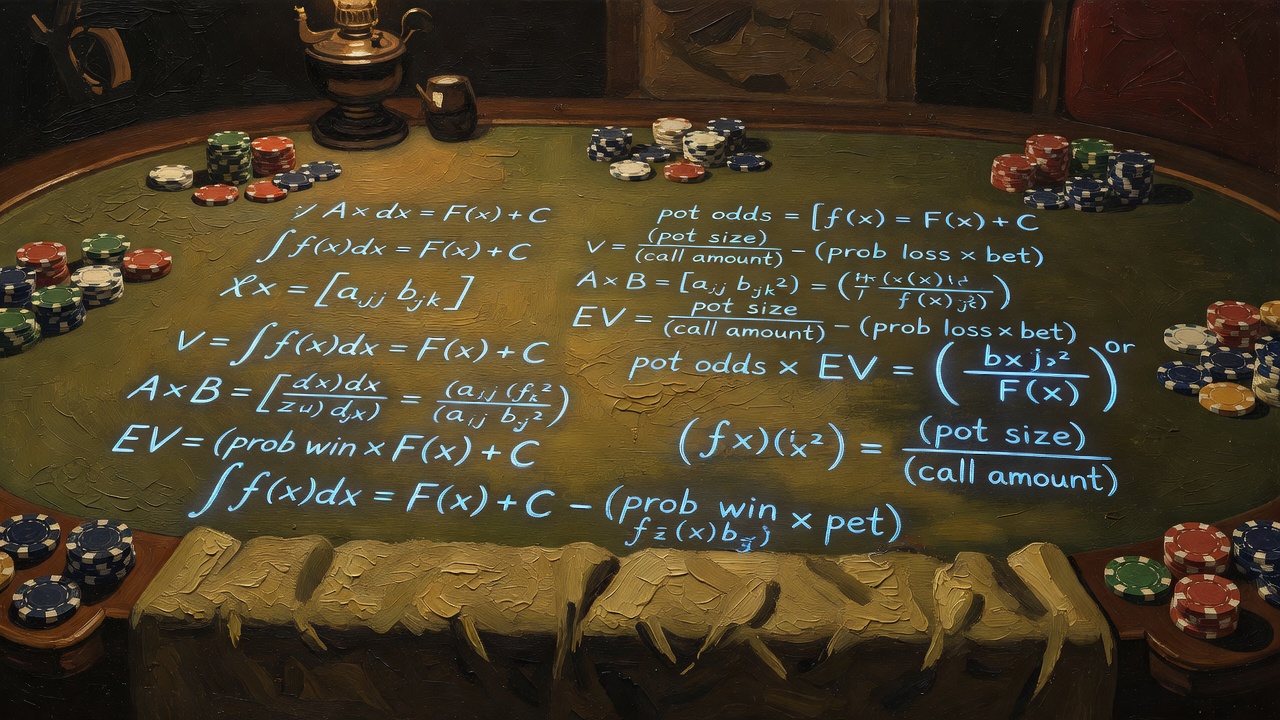
A solver is software that treats poker like a math problem instead of a game. It starts with the rules of poker and works backward. For any possible game state (your cards, community cards, number of opponents, stack sizes, position), the solver calculates the optimal action.
Optimal doesn't mean "best against amateurs." Optimal means "unexploitable." If you play GTO-optimal poker, an opponent cannot find a strategy that beats you over time.
You can still lose individual hands. But over thousands of hands, optimal beats everything else.
The math is complex, but the concept is simple. In poker, some hands have more value in certain positions than others. Some hands should be folded. Some should be raised. Some should be called. The optimal mix (the frequency at which you take each action) is mathematically determined.
Early solvers (PokerSnowie, PioSOLVER) operated on simplified versions of poker. Cash games with two players, or small tournaments. The computation was intensive. A solver might take hours to calculate the optimal solution for a single hand.
Modern solvers are faster. GTO+, MonkerSolver, and newer versions can solve much deeper game trees in reasonable time. A serious poker pro now owns a solver the way a carpenter owns a hammer.
The Before Times
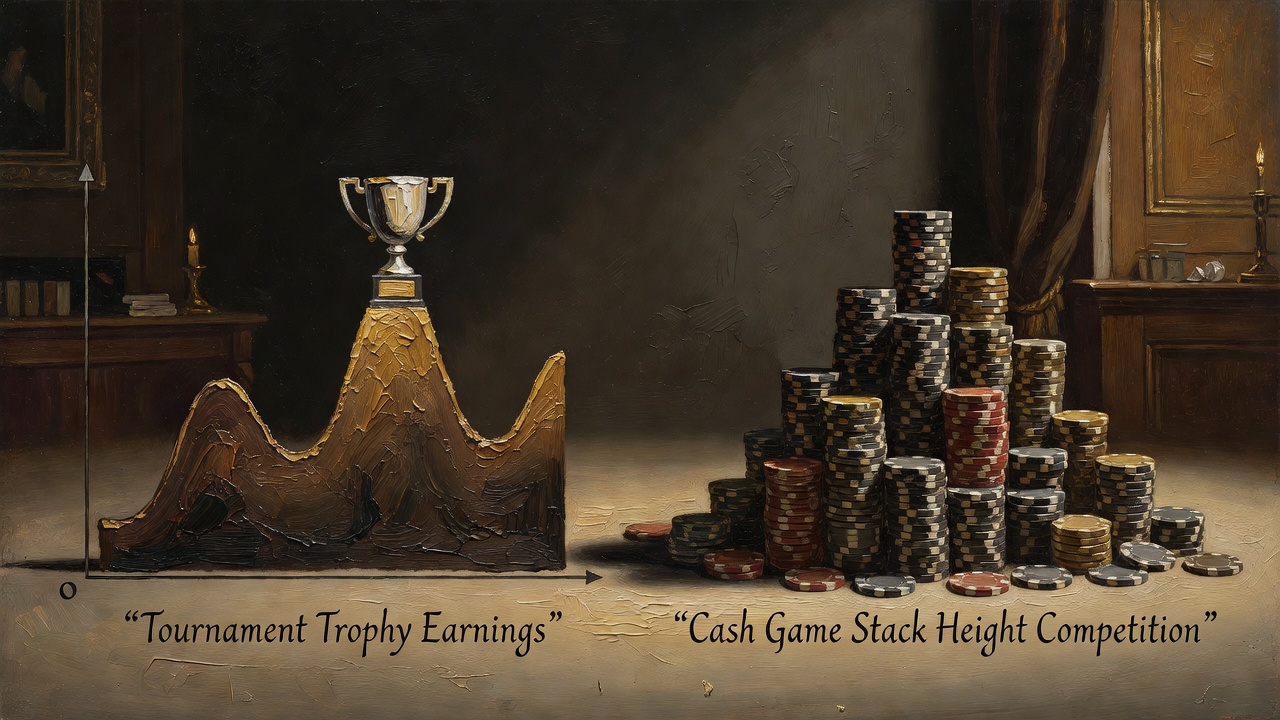
Old-school poker was people playing hunches. Doyle Brunson would sit down at a table, watch three hands, and know everything about every player. His instinct was built on decades of experience and pattern recognition that his brain had internalized.
That was actually pretty good. Instinct formed by ten thousand hands is a powerful thing. The problem is that instinct stops improving around hand ten thousand. You hit a ceiling based on what your brain can hold.
Solvers have no ceiling. They see every possible hand combination, every possible opponent action, every possible outcome. They calculate value in situations where human intuition has no data.
When PokerSnowie first arrived in the 2010s, pros would test their play against the solver. The discovery was humbling. Virtually every professional had leaks. Places where they played suboptimally. The solver would find them and destroy them.
The Integration Problem
Understanding that optimal poker exists and playing optimal poker are different. A solver gives you game theory. It doesn't tell you whether your opponent is the type of player who adapts, or the type who doesn't.
Robots play GTO-optimal poker. Humans still have to factor in exploitability. If your opponent is playing tight preflop, you can loosen up. If your opponent folds too much to aggression, you can attack. The solver assumes a ``best-case'' opponent who adapts instantly.
The best modern pros use solvers to understand game theory, then deviate from GTO to exploit specific opponents. You get the foundation from the solver. You get the edge from reading people.
In tournaments, solvers are now standard study. You work through hand histories using a solver. You see where your play deviated from optimal. You patch the leak. Every serious tournament pro does this.
In cash games, solver study is less common but increasingly standard in high-stakes games. Lower-stakes players often don't use solvers at all. The gap between a solver-educated player and a traditional instinct-player has become a chasm.
The Poker Economy Shift
Old poker rewarded feel and instinct and reading people. Those things still matter, but they matter less now.
New poker rewards whoever can integrate the most solver study into their actual play. It rewards youth, because younger players are learning GTO-optimal play as their baseline. It punishes older players who learned the game pre-solver and now have to unlearn instincts that worked but are suboptimal.
I've seen pros who played well for thirty years get demolished by 25-year-olds using solvers as a base layer. The 25-year-olds don't have the experience. But they have the foundation. Everything they learn is built on game theory instead of hunches.
This is why high-stakes games now have a very specific character. The players are either old school (and might still win through game reading, but they're fighting uphill), or young and solver-trained.
What Actually Happened
Poker was a game where hidden information and psychological reading created an edge. You won by knowing something others didn't, or by being better at reading tells, or by understanding what hands your opponent would play in certain positions.
Solvers made that knowledge quantifiable. They removed the hiding spots. They showed that certain lines are always suboptimal. They turned poker into a game where you win by knowing what the math says, and the margin of victory is whether you can factor in human deviation faster than your opponent can.
The game is better now (more honest, less luck-dependent in the short-term). The game is worse now (less room for creativity, less reward for instinct).
For most of my career, a sharp player with good instincts could beat a smarter player with worse instincts. Now the smart player with solver knowledge beats almost everyone unless they also have solver knowledge.
The poker I played is still poker. But it's a different game now.