Rakeback emerged in the late 1990s when online poker became competitive.
Before online poker, rake (the house fee) was simple: a dealer took a percentage of the pot. You played, the casino took 5%, and that was it.
Online, rake worked the same way. But online sites competed for players. A new site couldn't win on game quality alone. They needed an edge.
Someone realized: what if we gave money back to regular players?
Rakeback was born.
How It Works
You play poker. The house takes rake. At the end of the month, the site calculates how much rake you contributed and gives a percentage back.
A 25% rakeback deal means: if the house took $1,000 from pots you played in, you get $250 back.
It sounds generous. It's not. It's a way to disguise the actual rake.
Without rakeback, the rake is 5%. With rakeback, the rake is 3.75%. The difference is money, but it's money you've already lost and the sportsbook is returning.
The Mechanics
Rake is calculated by contribution. You contribute to the pot, so you contribute to the rake.
Say four players are in a pot: Player A contributes $100, Player B $100, Player C $50, Player D $50. The pot is $300. The house takes $15 (5% rake).
Rakeback is distributed based on contribution. Player A gets 5.25 of the $15 return (if rakeback is 35%, which is competitive). Player B gets 5.25. Player C gets 2.625. Player D gets 2.625.
Under this system, play money earns money back. Passive play doesn't.
The Negotiation
Rakeback is negotiable. A casual player gets 10-15% rakeback from a standard sportsbook.
A professional player (someone playing thousands of hands per month) can negotiate 40-50% rakeback.
A professional playing $5-10 games for 40 hours a week might generate $40,000 in rake per month. At 40% rakeback, that's $16,000 back.
Over a year, rakeback becomes a salary. Some professionals play at breakeven or slightly negative EV and still profit from rakeback.
The VIP Program Trap
Many sportsbooks replaced pure rakeback with "VIP programs." You earn points as you play. Points convert to cash or bonuses.
It sounds better. It often is worse.
VIP programs obscure the effective rake. You don't know exactly how much money is coming back. The sportsbook adjusts point values secretly.
A transparent rakeback deal (you know the percentage, you know when money comes back) is better than a VIP program where the rules change quarterly.
Why This Matters
Rake is the largest expense for most poker players. A $5-10 no-limit game takes $2 rake per hand. In a session with 30 hands, that's $60 gone before variance even hits.
Rakeback reduces this. A 30% rakeback deal reduces rake from $60 to $42.
Over 100 hours of play per month, that's $1,200 back per month. $14,400 per year.
For a professional player, rakeback is income. For a casual player, it's a discount.
The Hayday
Rakeback was most generous from 2005 to 2010. Competition for online poker players was intense. Some sites offered 50% rakeback to stars players.
Black Friday (2011, when the US shut down online poker sites) eliminated most of this. Remaining sites reduced rakeback to 10-20% as they became monopolies.
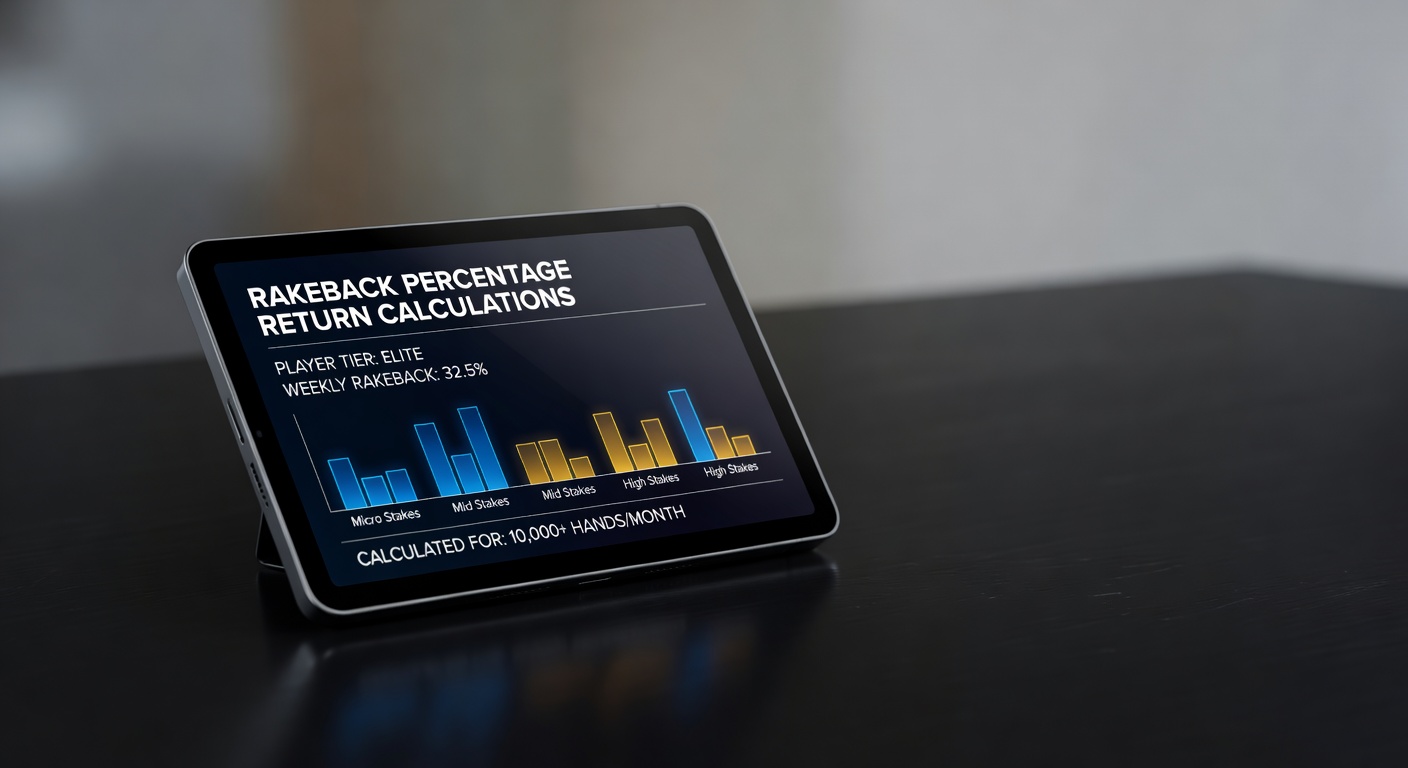
Recently (2020s), with new sites arriving, rakeback improved again. Sites offer 25-35% rakeback to professional players.
Today
If you play online poker and you're not getting rakeback, you're leaking money.
Negotiate. Most sportsbooks have affiliate programs or professional player programs. A professional player making $500+ per month in rake qualifies for better terms.
Ask directly: "What rakeback can you offer me?"
The sportsbook will either offer a rate or they won't. If they won't, move to a competitor.
Rakeback is how online poker players who aren't winning poker players still make money. It's the minimum expectation.