The Trap
You're dealt aces. You're thrilled. You put in a raise. Your opponent puts in a re-raise. You go all-in. They call.
The board comes: King, Queen, Jack, with two spades.
Your opponent has King-Queen. You lose.
This happens sometimes. Not rarely enough that you shouldn't expect it, not frequently enough that you can anticipate it every time.
The Mathematical Foundation
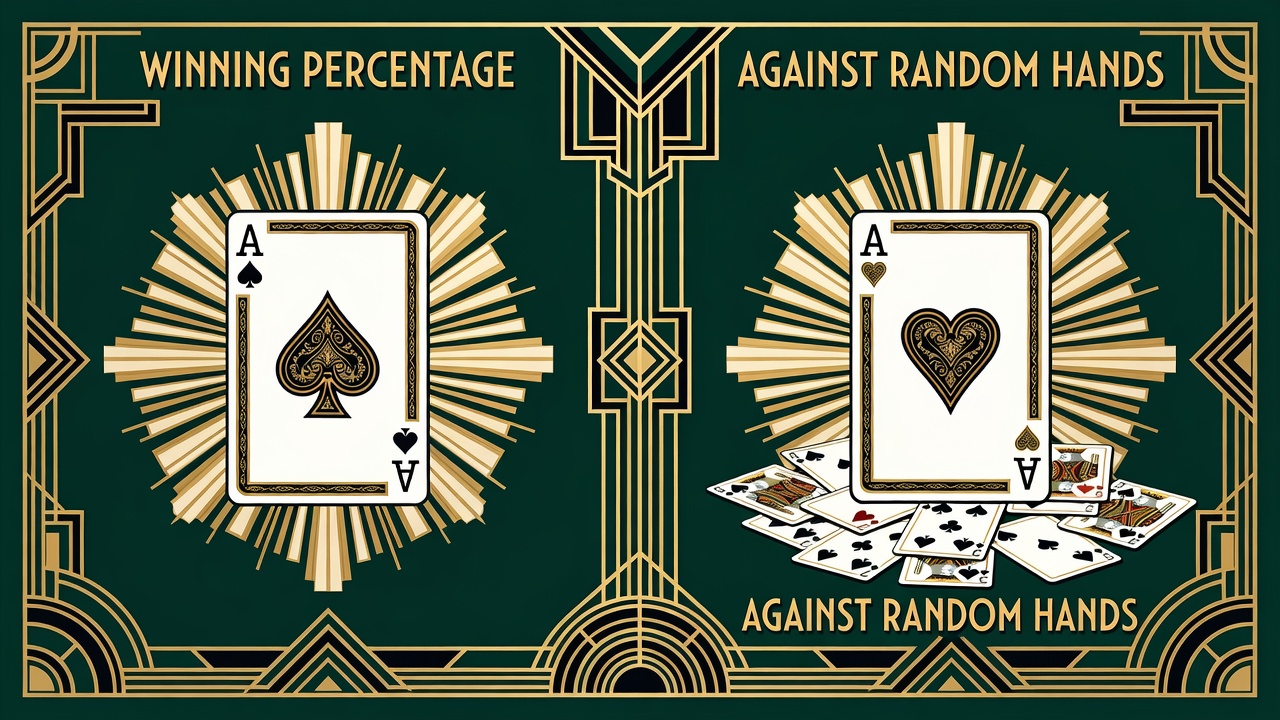
Aces beat any two random cards about 85% of the time preflop.
85% is not unbeatable. It's not guaranteed. It's just more likely than not.
Over 20 hands, you'll lose three. That's the cost of playing a big pair.
Position Changes Everything
On the button, you raise with aces. The big blind calls. The flop comes Q-Q-5. They check. You bet. They fold.
Same hand from early position: you raise with aces. Someone goes all-in. They have a real hand, not a random hand.
Early position aces against all-in puts you in a harder spot mathematically, because all-in re-raisers have stronger ranges than the average hand.
Multi-Way Complications
Heads-up, aces are strong. Aces against one opponent, the math is clear.
Aces in a four-way pot with a dry board and a flush draw? You're not as confident.
More opponents mean more ways to be beaten. You can't just think about pair-strength when you're worried about flush draws and gutshot straights.
The Psychological Barrier
Losing with aces hurts disproportionately because you started with the best hand.
The emotional pain of losing a hand you "should" have won is stronger than the pain of losing a hand you were never confident in.
Best players separate expectation from outcome. You played correctly and lost to variance. That's not a failure.
The Skill Integration
Playing aces well isn't about winning with them. It's about winning the right amount when you do win and losing the right amount when you do lose.
If you can win 85% of the time with aces and lose only 15%, and when you lose you lose slightly less than when you win, you're making money on the hand over time.
The Variance Reality
Poker is a game where you can play perfectly and still lose. Aces get beat. Constantly. Not every hand, but constantly enough that you have to accept it.
If you can't accept losing with aces, you can't play poker at the level where aces matter.
The Bankroll Requirement
You need to be able to lose a large pot with aces and keep playing as if nothing happened.
If losing $500 with aces breaks your emotional equilibrium for the session, your bankroll is too small.
The Best Practice
Play aces aggressively preflop. Build pots. Put pressure on opponents.
But understand that you're playing for the long-term edge, not for the guarantee of this particular hand.
Over 1,000 hands, aces print money. Over one hand, they lose sometimes.
The Acceptance
The best poker players aren't the ones who win the most with aces. They're the ones who stay calm when aces lose.
That's the actual skill.