Monte Carlo is Monaco's answer to a tax problem. That is the short answer. Here is the long one.
Monaco is a micro-state on the French Riviera. Roughly two square kilometers. Ruled by the Grimaldi family since 1297. Until the mid-nineteenth century, its primary economic activity was citrus and olive farming. In 1848, after the towns of Menton and Roquebrune declared independence, Monaco lost most of its agricultural base and nearly all of its tax revenue. The Grimaldis, facing bankruptcy, needed a new economic model.
They picked gambling.
The First Casino Failed
The first Monaco casino opened in 1856 under Princess Caroline, acting as regent for her son Charles III. It was small. It was in a villa. It failed.
Two problems. First, Monaco had no railway. European high rollers could not easily reach it. The nearest rail station was in Nice, and travelers had to complete the final leg by coach over difficult coastal roads. Second, the casino had no international marketing. A casino in an unknown principality with no transportation infrastructure does not produce revenue.
By 1862 the operation was effectively insolvent.
This is where Francois Blanc enters.
Francois Blanc and the Bad-Homburg Precedent
Blanc was already the most successful casino operator in Europe. He had run the casino at Bad Homburg, in Germany, since 1843. He had invented, along with his brother Louis, the single-zero roulette wheel, which gave the house a lower edge than the then-standard Italian double-zero wheel and allowed him to undercut competitors while still turning a profit.
In 1863, Charles III of Monaco signed a fifty-year concession with Francois Blanc. Blanc paid 1.7 million francs for the concession. He then moved his operation from Bad Homburg to Monaco, bringing his staff, his capital, and his international client list with him.
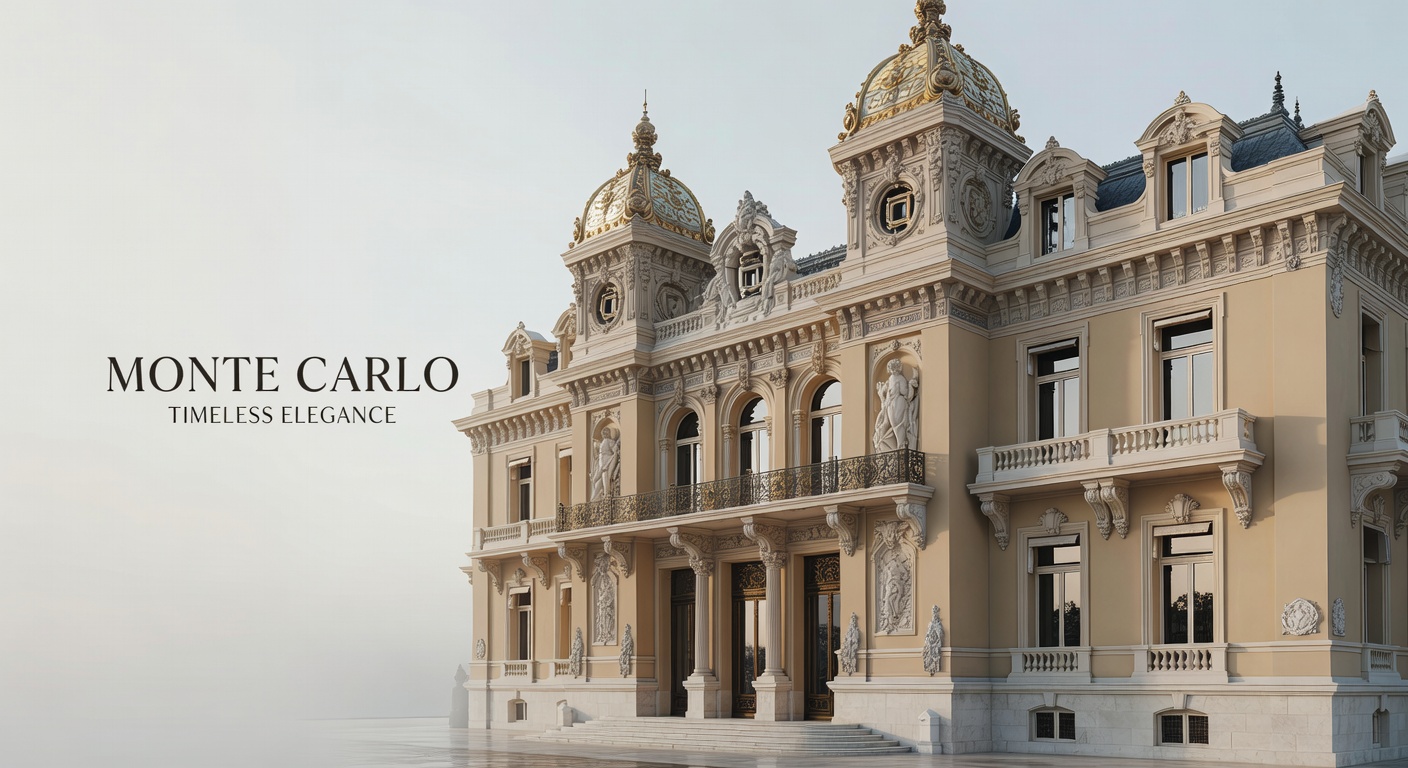
Within three years, Blanc had built the Casino de Monte Carlo as we roughly know it today. He hired Charles Garnier, the architect of the Paris Opera, to design the casino building in 1878. He underwrote the construction of a rail connection to Nice in 1868. He built the Hotel de Paris next door. He wrapped the whole operation in the branding of aristocratic European leisure.
The gambling was the product. The building, the rail line, the hotel, the gardens, the opera house, all of it was marketing for the product.
The Tax Mechanism
Here is the mechanism that made it work for Monaco specifically.
The concession agreement gave the casino a monopoly on legal gambling in Monaco. In exchange, the operator paid a substantial share of gross revenue to the principality. By 1869, gambling revenue was sufficient that Charles III abolished personal income tax on Monaco residents and citizens. This was not a coincidence. It was a deliberate branding decision. Monaco became, and remains, one of the few European jurisdictions without personal income tax, and this policy was financed, initially, entirely by the casino.
The consequence is that Monaco's identity as a tax-friendly residence for the European wealthy was built on the profits of the casino, which was itself built on the money of the European wealthy who came to visit. It is a closed loop.
The loop has been durable. Monaco residents today still do not pay personal income tax. The modern casino contributes a smaller share of the principality's total revenue than it did in the 1880s, but the social architecture established in the Blanc era persists.
The Prohibition Against Residents
One rule from the Blanc era still stands. Monaco residents are prohibited from gambling at the Casino de Monte Carlo.
This rule was inserted into the concession to make the casino politically acceptable to the principality's small population. The argument: the casino is a machine for extracting money from wealthy foreigners, and Monaco residents, who benefit indirectly through low taxes and state investment, should not be subject to its losses. The rule also neutralized a standing complaint from French and Italian diplomats, who had pressured Monaco to limit the casino's ability to bankrupt visiting citizens of their countries.
The rule is still enforced. A Monaco citizen entering the main gaming rooms at the Casino de Monte Carlo will be turned away at the door.
Why Monte Carlo Became the Brand
A casino in an unknown principality does not automatically become a global brand. Monte Carlo did. Several specific developments drove this.
First, the railway. The opening of the Nice-Monaco line in 1868, followed by the extension to Ventimiglia in 1872, made Monaco accessible in a day's travel from Paris, Geneva, or Turin. Before this, a trip to the Riviera was a multi-week expedition. After, it was a weekend.
Second, the physical presence of the Garnier-designed casino building. Architecture matters in casino marketing. A serious building produces a serious reputation. The Casino de Monte Carlo was, from 1878, the most beautiful casino building in Europe. Photographs and illustrations of it circulated widely in the late nineteenth-century press, creating a brand recognition that competitors like Bad Homburg or Spa could not match.
Third, the association with royalty. The Casino de Monte Carlo hosted, across the 1870s and 1880s, the Prince of Wales (later Edward VII), Kaiser Wilhelm II, Tsar Alexander III, and a long list of lesser European royals. Each royal visit was reported in the press. Each report reinforced the positioning of Monte Carlo as the casino where the European aristocracy went to gamble. The positioning eventually became self-fulfilling.
Fourth, the stories. Charles Wells, who allegedly broke the bank at Monte Carlo in 1891 and inspired a popular English music hall song, gave the casino a mythology. So did various Russian grand dukes, who lost enormous sums in the 1880s and 1890s and were written about extensively in European newspapers. The stories, accurate or exaggerated, built a narrative that would have taken decades to construct deliberately.
The Casino de Monte Carlo made itself famous by being in the right place at the right time with the right building and the right clients. The location was a decision. The building was a decision. The clients, mostly, came because the other three decisions had been made well.
The Modern Operation
The Societe des Bains de Mer, the concessionaire that succeeded Blanc's operation, still operates the Casino de Monte Carlo along with the Hotel de Paris, the Hotel Hermitage, the Monte Carlo Bay, and several other properties. It is majority-owned by the Monaco government. It has been publicly traded on Euronext Paris since 1923.
The casino still draws a significant high-limit clientele, particularly from Russia (until 2022), China, and the Gulf states. The games are classical: European roulette, chemin de fer, trente et quarante. Slots exist but are not the feature. The casino has not tried, and does not seem to want to try, to compete with Las Vegas or Macau on scale. Its business model remains what Blanc designed in 1863: a small number of high-value customers in a beautiful building at the edge of the Mediterranean.
This is the explainer. A broke principality. A Frenchman with a better wheel. A railway. A concession. A tax mechanism. A building. A hundred and sixty years of compounding brand equity.
The gamblers came because the other pieces were already in place. That is the whole story.