So I'm sitting at The Crown on a Wednesday afternoon, right, and my mate Danny slides in from the back room. Danny had been working for Ladbrokes for six years, doing odds compilation. Not selling bets, not managing a shop. Actually setting the odds. And he would come in after his shifts and tell me things nobody else was talking about.
First thing you've got to understand: the odds you see on a screen are not the same as the odds the bookmaker actually calculates. That's the whole game right there.
The First Number
Danny explained it this way. A bookmaker gets together a team of people in the morning. Maybe it's tennis, maybe it's football, maybe it's darts. Someone, usually the lead odds compiler, has to come up with an initial assessment of what the true probability is. Federer versus some rank 200 player. What's the real chance Federer wins? Maybe 94%.
That's not a guess. That's built on models. They've got years of data: head-to-head records, recent form, injury reports, surface preference, weather data. They run it through their system. The system says Federer wins 94% of the time in this matchup, given current conditions.
So the true odds on Federer are 1 to 16, which is 1.06 in decimal. That's what the true probability says.
The Margin
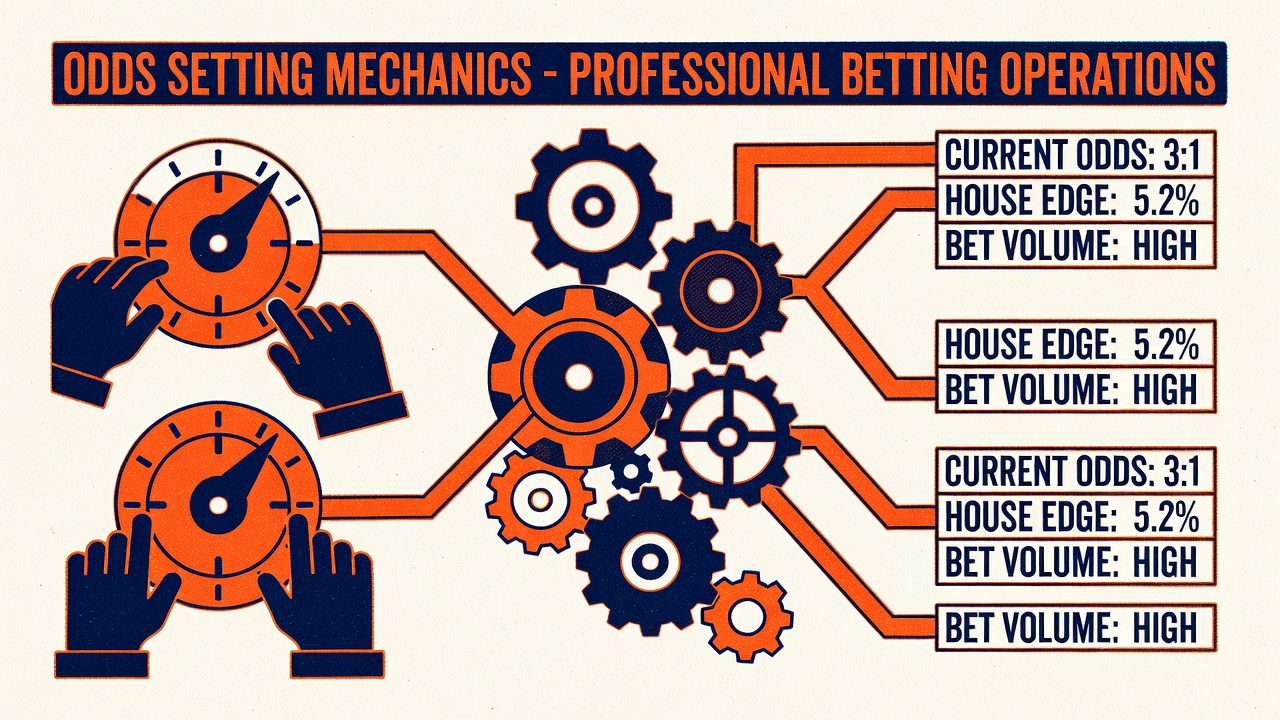
But Ladbrokes doesn't offer 1.06. They offer 1.05 or lower. Why? The margin. That's how they make money. If they're taking bets on both sides, they need to guarantee a profit regardless of outcome.
Danny said they'd typically apply a margin of anywhere from 3% to 8% depending on how much money they expected the bet to attract. Popular bets, low margin. Obscure matchups, high margin.
So on a Federer match where the true odds are 1.06, they might offer 1.03. Now they've got their margin built in. If everyone bets Federer, Ladbrokes makes money because the odds are shorter than true value. If someone bets the underdog, Ladbrokes makes money the other direction.
The Opposite Side
This is where it gets interesting. The bookmaker publishes odds, but they don't control the betting volume. Maybe they think Federer should be 1.06, but they publish 1.03 and only $500 comes in on that side. Meanwhile, $50,000 comes in on the underdog.
Now they're unbalanced. They've exposed themselves to a massive loss if the underdog wins. So what do they do? They move the odds.
They shorten the odds on the underdog. Make it less attractive. Maybe they move him from 12.00 to 11.50. That's supposed to draw more money to the favorite and less to the underdog. It's rebalancing in real-time.
Information Flows
Danny would tell me about injuries or news that changed the odds in an instant. A player gets a muscle strain two hours before a match, Ladbrokes' team knows before the news is published anywhere. Their model updates. The odds shift. They tighten the spread on the favored player because they now know something the public doesn't.
That information advantage is worth real money. If Federer gets a shoulder injury and the general public doesn't know for another two hours, Ladbrokes has two hours to move their odds before the wave of money comes in based on the new information.
Some of that information comes from their own network of sources. Some of it comes from competing bookmakers. If William Hill moves odds, Ladbrokes notices and adjusts accordingly. It's like a dance where everyone's watching everyone else and trying to predict which direction the music is going.
When Markets Get Complicated
Multi-way markets are where Danny said things get really interesting. A tennis tournament with 128 players. What's the true probability of the #5 seed making the final? You can't just think about the next match. You have to model out the entire draw, consider various matchup outcomes, weight by probability.
Large bookmakers use algorithms for this. But even algorithms start with human judgment calls. Is the #5 seed playing with confidence right now, or is he struggling mentally? The models don't capture that. So the odds compilers adjust the algorithm's output based on judgment.
That's where the edge gets interesting. A smart odds compiler understands the algorithm well enough to know when it's overvaluing or undervaluing certain outcomes. He applies small adjustments. Over thousands of bets, those adjustments accumulate into profit.
Closing Line Value
Here's something Danny pointed out that most bettors don't think about. By the time a match starts, the odds have often moved significantly from where they were published. A player opens at 2.50 to win a tournament, but by match time, he's at 2.20. What happened? Money came in. Information changed. The market moved.
A sophisticated bettor looks at closing line value: the odds they got versus the odds at game start. If you got 2.50 and the closing line was 2.20, you got value. Over time, getting value is how you make money.
Bookmakers track this internally. They want to know if they're closing odds that are profitable or losing odds. They want to understand which of their compilers is setting odds that beat the closing line.
The Real Work
Danny once said the whole thing was less about prediction and more about understanding volatility. Markets move. People react. Information gets priced in at different speeds depending on how obscure the event is.
A major tennis final: everyone's looking at it, money flows fast, the odds move toward true probability quickly. A third-division football match: only sharp bettors are paying attention, so Ladbrokes can hold odds that favor the house longer before the market corrects them.
The bookmaker who understands volatility patterns is the one who can move odds at exactly the right time and capture profit from the lag between information and market adjustment.
I haven't seen Danny in years. Ladbrokes doesn't really exist the same way anymore. But that Wednesday conversation about odds-making gave me more insight into how money actually moves through markets than any business book ever could.