
Spin the Wheel Bonuses: A Look at Gamified Promotions
Gamified promotional mechanics are structured betting offers that require specific regulatory treatment. This analysis examines their classification and compliance requirements across jurisdictions.
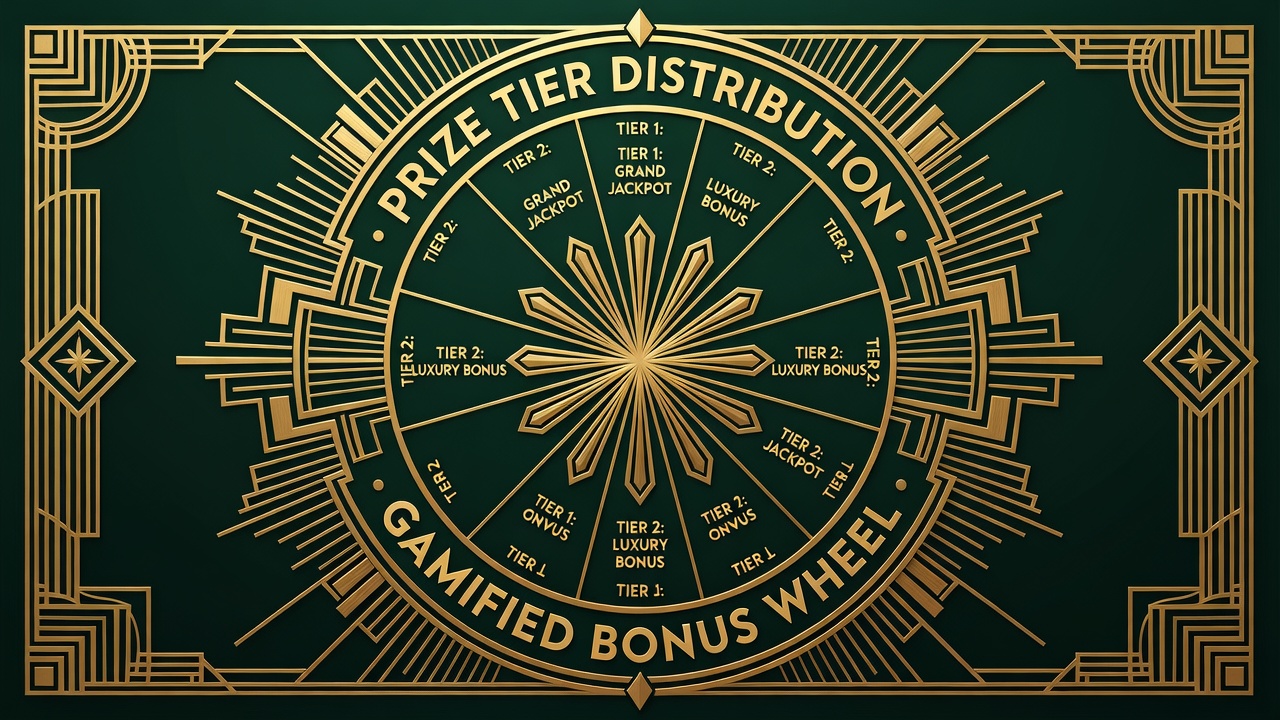
Gamified bonus mechanics, commonly referred to as "spin the wheel" or "pick-a-prize" promotions, have proliferated across licensed gaming jurisdictions since 2015. These mechanics present a secondary gaming element that operators embed within their bonus offerings. The Gambling Commission (UK), the Malta Gaming Authority (MGA), and the New Jersey Division of Gaming Enforcement have each developed distinct regulatory frameworks for their classification and approval.
Definition and Structural Components
A gamified bonus operates as follows: an operator offers a deposit-based promotion wherein the customer receives not a direct monetary credit but rather entry to a pseudo-game. This pseudo-game typically displays a wheel, a selection grid, or a progressive reveal screen. The customer makes a selection or spins the wheel, and receives a variable outcome: bonus credits ranging from $5 to $500, free spins on designated slots, or cashback percentages.
From a regulatory standpoint, the critical question is whether this pseudo-game constitutes "a game of chance" as defined by applicable licensing statutes. If it does, additional licensing, RNG (random number generator) certification, and hold percentage disclosure may be required.
The MGA (Malta Gaming Authority) has issued guidance on this matter in its Product Certification process (as of 2021). A spin-the-wheel mechanism attached to a bonus is classified as a "promotional game" rather than a primary game of chance if: (1) it requires no separate wagering beyond the implied deposit, (2) it returns only bonus credits (not cash prizes), and (3) it is offered exclusively to registered players as a time-limited promotion.
Under these conditions, MGA licensees may offer such promotions without separate RNG certification for the wheel itself. However, the underlying bonus (the money awarded) must still comply with bonus playthrough and T&C transparency requirements.
Jurisdiction-Specific Requirements
United Kingdom (Gambling Commission)
The Gambling Commission's Handbook (updated October 2024) does not explicitly define gamified bonuses. However, the Commission's principle-based regulation requires operators to ensure all promotions are transparent and non-misleading. A spin-the-wheel bonus must clearly disclose:
- The probability of each outcome (e.g., "20% chance of $100 bonus, 50% chance of $25 bonus, 30% chance of $5 bonus")
- The playthrough requirement applicable to the awarded bonus
- Any restrictions on game or market eligibility (e.g., "free spins awarded on Book of Dead only")
Operators frequently violate this requirement by obscuring the true probability distribution. In Q3 2024, the Gambling Commission issued compliance notices to three UK operators for failing to disclose that high-value outcomes (e.g., $500 bonus) had less than 0.1% probability. Operators must provide this information in the Promotion Terms, accessible to the customer at sign-up.
Malta (MGA)
The MGA's regulations (Gaming Consolidated Laws Chapter 7 of the Laws of Malta) require that any promotional mechanic using randomization must employ certified RNGs. However, MGA guidance (2019-present) provides a carve-out for "ancillary promotional wheels" that award bonus tokens rather than currency.
The distinction is critical. If the wheel awards "bonus credits" that cannot be withdrawn as cash (i.e., playthrough-only funds), the RNG certification requirement is waived. If the wheel awards "cash bonuses" or "cashback," the RNG must be certified to the MGA's standard (RNGF.5 specification). Failure to obtain certification results in license suspension.
New Jersey
The New Jersey Division of Gaming Enforcement (DGE) has not issued specific guidance on gamified bonuses as of April 2026. However, the DGE's approval matrix for promotional offerings requires operators to submit bonus terms 30 days before launch. The DGE will classify the promotion as either:
- Bonus promotion (simple credit): no additional scrutiny beyond T&C review
- Game-like promotion (wheel, scratch card, etc.): subject to bonus hold percentage testing (DGE expects a "maximum house advantage of 4-5%" in the promotional mechanic itself)
Two New Jersey operators (BetRivers, DraftKings) have received DGE approval for spin-the-wheel bonuses under this classification. Both submitted probability matrices showing hold percentages of 4.2% and 3.8%, respectively.
Operator Incentives and Consumer Harm
Gamefied bonuses create what regulators term "behavioral friction." A customer sees a promotion labeled "Free $100 Bonus" but the actual value depends on the wheel outcome. Psychologically, this two-step process reduces clarity and increases the likelihood of misunderstanding.
The research (Markham et al., 2020, published in Journal of Gambling Issues) shows that gamified bonus mechanics increase the expected time-to-playthrough by 15-25% compared to direct-credit bonuses. Customers attempt to "unlock" higher-value outcomes by placing additional deposits.
In response, the Gambling Commission (UK) has signaled potential future restrictions on outcome-opacity in promotional games. The Commission's 2025 Consultation on Safer Gambling included a proposal that operators must disclose "expected promotional value" (i.e., the mathematically expected outcome of the wheel) in the same font size as the top-prize claim.
Compliance Checklist
Operators offering gamified bonuses should:
- Verify jurisdiction-specific definitions of "promotional game" versus "game of chance." Obtain written guidance from the relevant regulator if classification is ambiguous.
- Implement transparent probability disclosure in the Promotion Terms. Avoid language such as "spin the wheel for a chance to win up to $500." Instead: "Expected promotional payout: $47.50. Probability of highest tier ($500): 0.1%."
- If the bonus awards currency (not credits), obtain RNG certification if required by the jurisdiction.
- Test the promotional mechanic's hold percentage if the jurisdiction specifies a maximum (e.g., New Jersey: 4-5%).
- Document all promotional changes and submit updates to the regulator if your license terms require pre-approval.
Gamefied bonus mechanics are lawful under most licensing regimes, but only when transparency and mathematical fairness are prioritized. Operators who obscure probability or inflate expected value face license suspension.

Filed on
Shelved alongside
- BN·B269
Bankroll Tips When Playing Through a Wagering Requirement
Wagering requirements are a numbers game. You've got X dollars to clear Y in action. Know your burn rate before you sit down.
By Play Trump Casino Reading Room
- BN·B661
Reading Casino Bonus Terms: A Sensible Person's Guide
The casino bonus offer appears in bold lettering: "Up to 500 pounds matched." The terms and conditions appear in eight-point grey text on a light grey background.
By Play Trump Casino Reading Room
- BN·D365
Deposit Free Spins vs No Deposit Free Spins: A Comparison
Free spins are the slot equivalent of free samples. They sound good. They almost always come with strings.
By Play Trump Casino Reading Room
- BN·S565
The Evolution of Slot Bonus Rounds Over the Last Decade
Ten years ago, slot bonus rounds were simple. Pick three boxes, win a prize. Now they are elaborate narratives with dozens of sub-features. The complexity serves a purpose.
By Play Trump Casino Reading Room