
Bally, IGT, and the Companies That Built the Slot Industry
The names behind the machines read like a history of discretion. A gentleman from Reno, a firm from Nevada. The details emerge only when the light is low.
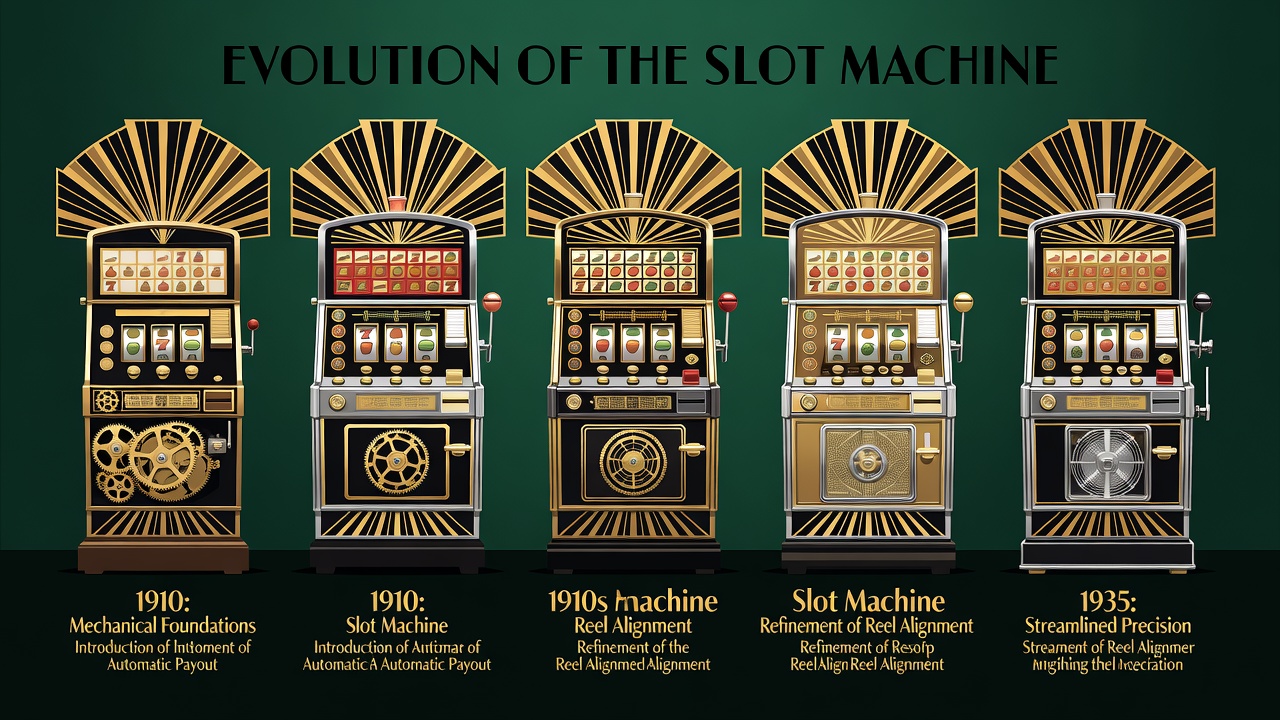
There was a casino in Las Vegas, not the grand ones you read about, where a particular high-roller kept a suite. He rarely gambled. He visited the mechanical room. A man from International Game Technology would occasionally join him for what appeared to be inspection tours. Nothing was said of these visits in the public record. The machinery, however, told a story for those patient enough to listen.
Bally, in its day, represented a certain kind of American innovation. William O'Brien had built mechanical slot machines since the 1930s, but it was his successors who turned the thing into an empire. By the 1960s, Bally Manufacturing was not merely building slots; it was building the infrastructure of gaming itself. The machines bore their name the way luxury goods bear their maker's mark. Discreet, understood.
The Bally Era: Electromechanical Dominance
When Bally rolled out the first electromechanical slot machine in 1964, it represented more than a technological shift. It represented a philosophy: the house controls everything, and it does so quietly. No more purely mechanical tumbling drums. Electromagnetic components managed payouts, probabilities, and above all, oversight. A casino operator could now know, through electrical readouts, how much money the machine had taken and dispensed. The information flowed upward to management. Transparency, after a fashion.
By the early 1970s, Bally machines occupied roughly 60 percent of Nevada casino floors. Not through marketing, but through relationships. A suit from Bally might visit a casino manager on Tuesday. By Thursday, new machines arrived. The previous supplier's units disappeared. This was business conducted without raised voices.
Bally's technical superiority was real. Their machines held legitimacy, the kind operators valued. If a customer lost $500 to a Bally machine, the customer trusted it was not rigged. That trust was worth billions.
IGT's Rise: The Computer Age
International Game Technology entered the picture in 1975, initially as a service company. They maintained machines, read meters, and eventually began manufacturing their own. But it was their move into video slots during the 1980s that shifted the entire landscape.
Where Bally had mastered the electromechanical relay, IGT understood software. A video slot was not a machine in the classical sense; it was a computer wearing a cabinet. The reels were rendered on screen. The odds could be adjusted through programming. The data generated by these devices flowed in streams: play history, payout patterns, player behavior.
This was where modern casino gaming truly began. IGT's machines weren't just more profitable; they were more informative. Casinos could track which games were played by which demographics. They could adjust theoretical hold percentages. They could understand the player.
By 1989, IGT had acquired Bally's operations in certain markets. The era of clear dominance shifted. Bally receded. IGT ascended. In the language of business, this is called a transition. In the casinos, it was barely remarked upon.
The Third Act: WagerWorks, Aristocrat, and Consolidation
The 2000s brought new complications. Aristocrat, an Australian gaming manufacturer, began exporting machines to American casinos. Scientific Games Corporation, which had merged with WagerWorks, entered the space. Suddenly there were competing architectures, competing data systems, competing approaches to how a gaming floor should be configured.
But the fundamental truth remained unchanged. The major operators still relied on IGT for a substantial portion of their floor. Caesars Entertainment, Wynn Resorts, MGM Resorts. They bought IGT machines because those machines generated reliable revenue. A casino operator does not change their floor hardware because of sentiment. They change it because the numbers say so.
By 2014, IGT had acquired the operations of WagerWorks and other smaller competitors. The circle closed. Dominance, once more, accumulated.
What the Machines Tell
The history of slot manufacturing is, in many ways, the history of data. The first electromechanical machines allowed casinos to count money. Video slots allowed them to understand behavior. Modern gaming systems, networked and encrypted, allow them to predict behavior.
A high-roller plays the same machine every visit. The casino notes this. The machine begins to hit more generously. Is this coincidence? The operator alone knows. The technology that Bally pioneered and IGT perfected was not, at its core, about generating fair games. It was about generating games that users wanted to play repeatedly, that generated specified theoretical revenue, and that created the illusion of control in a system entirely controlled by mathematics.
This is not an accusation. This is an observation. The industry was built by men who understood margins and how to preserve them. The machines reflect their philosophy. Elegant. Unobtrusive. Profitable. The sort of thing one might see on a gaming floor and never question further.
Those who have spent time in the mechanical rooms, watching meters advance and listening to the soft click of electrical relays, understand what appears on the surface is precisely what the designers intended: a world of chance and certainty, coexisting without friction.

Filed on
Shelved alongside
- SL·R629
Robbed at Gunpoint After a $3,203 Slot Win
A casino winner was followed across state lines and held up at gunpoint after cashing out a modest slot jackpot, raising questions about player safety once the chips are cashed.
By Play Trump Casino Reading Room
- SL·S563
Why Short Slots Sessions Spike Your Expected Value
Hot take: the worst move a slots player can make is sit down and grind for six hours. You know what I mean? Longer play sounds like more opportunity, but…
By Play Trump Casino Reading Room
- SL·N328
Why Slots Engineer Near-Misses (It's Legal and It Works)
The slot machine doesn't care about your feelings. It does, however, care about your money. Near-misses are how modern slot design keeps you feeding cash at a…
By Play Trump Casino Reading Room
- BN·D365
Deposit Free Spins vs No Deposit Free Spins: A Comparison
Free spins are the slot equivalent of free samples. They sound good. They almost always come with strings.
By Play Trump Casino Reading Room